Episode 1: the Market Intelligence Committee

Stefano Fogli and Icíar Martínez Núñez, respectively Chair and Vice-Chair of the Market Intelligence Committee of the FTTH Council Europe, address some of the most common questions we receive on the work of this very dynamic working group:

  1. What are the main activities of the Market intelligence Committee?
  2. Who participates in the committee and how is the work organised?
  3. What is the workplan of the committee for 2023?
  4. What do you value the most from your work at the FTTH Council Europe?

Read the full interview below to get the anwers to these questions.


What are the main activities of the Market Intelligence Committee?
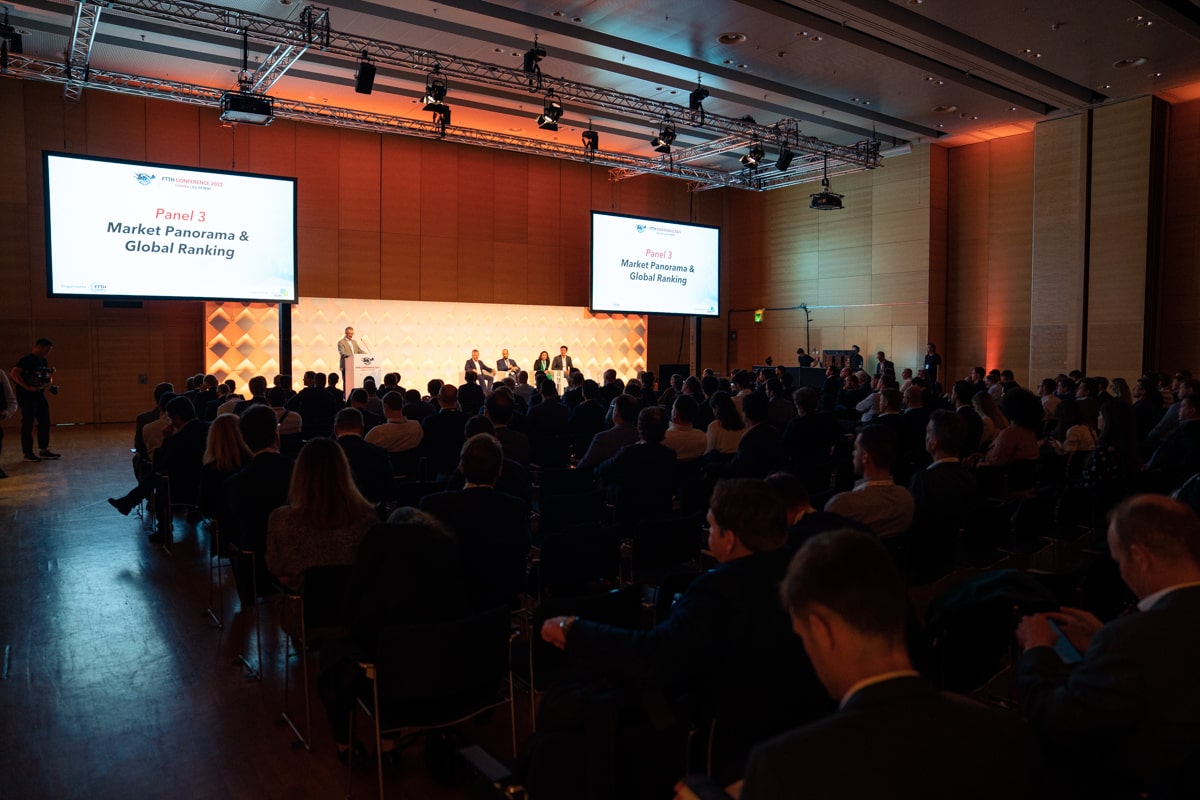
The purpose of the Market Intelligence Committee is to analyze the European market with regards to full-fibre deployment, in order to understand the status and the future evolution for every European country. We try to detect and share with both other Members of the FTTH Council Europe and the general public valuable market drivers, best practices and lessons learned from the data we gather.

We summarize the above analysis within our flagship report, the “FTTH/B Market Panorama”, which we publish since 2012. This report is built from the ground-up every year in cooperation with a partner analyst, using various official sources and the fundamental input coming from many Members active in all European countries.

In the last few years, the Committee has broaden its scope by producing two more reports: the FTTH Market Forecasts 2022-2027 and an overview of fibre deployments in rural areas

More and more often, we collaborate with other committees of the Council, as we see various overlaps in the topics we cover. In fact, we have been already involved in many other studies such as the Response to the public consultation on the draft BEREC Report on a consistent approach to migration and copper switch-off, a study on Best Practices in Fibre and advertising and on the Socio Economic Impact of FTTH


Who participates in the committee and how is the work organised?

The Market Intelligence Committee can count on almost 80 members, from 50 member companies.

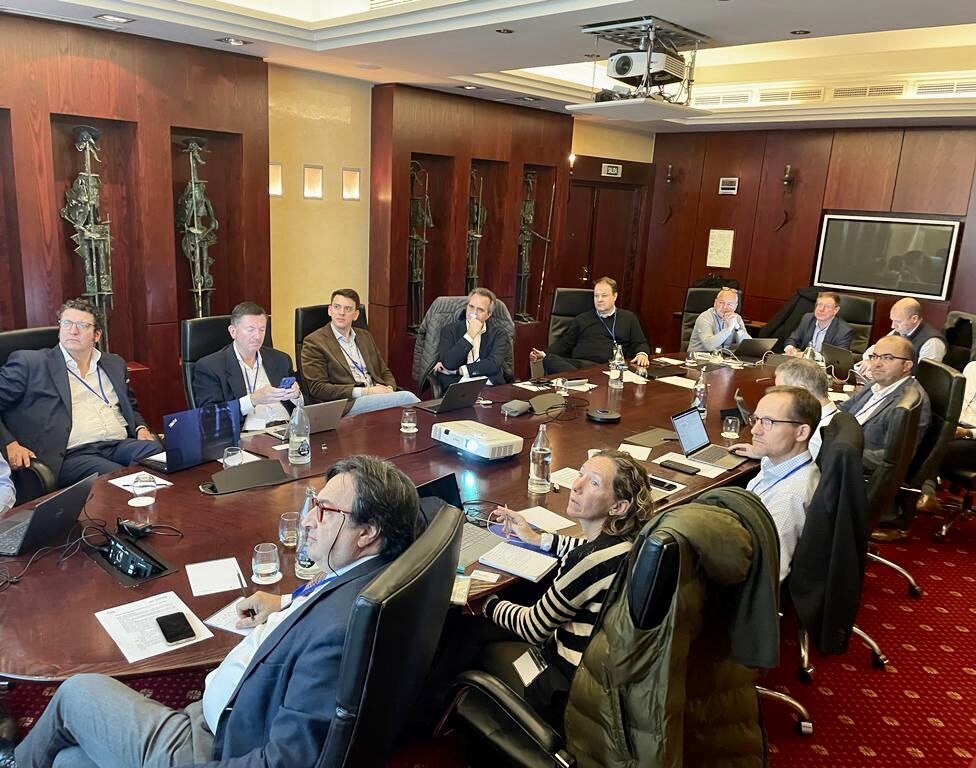
We have a monthly call to review the workplan and to catch up on the ongoing activities. During the General Assemblies of the FTTH Council Europe, we usually have a wider exposure to the entire membership, and we take the opportunity of such gatherings to present and discuss our future plans. As a committee, we pursue our work in coordination with the Board of Directors of the association, thanks to a specific liaison contact.

As the annual FTTH Conference approaches, our workload consequently increases, and we strengthen the collaboration with our partner analyst to get our Market Panorama report ready to be officially presented during the event. In addition to this, every year we organize a workshop focused on the country where the conference takes place. Next year's FTTH Conference will happen in Madrid, and we are working hard to prepare a good session for all the delegates coming to Madrid!


What is the workplan of the committee for 2023?

As already mentioned, the key activities of the committee are the main reports we produce on an annual basis:  the FTTH/B Market Panorama, the FTTH Market Forecasts and the FTTH/B in Rural Areas report.

We are working closely with our analyst partner to strengthen the market data and to introduce some additional elements to our reports, such as new insights covering the technology used in fibre deployment. Also, we aim at todelivering extra value from the historical data we have at our disposal, offering a vertical view per each country, which highlights the path towards FTTH/B.

Personally, what do you value the most from your work at the FTTH Council Europe?

Stefano: what I value the most is being able to see from a very privileged angle the progress that Europe is making towards a major goal, which has an enormous benefit to our society

Iciar: For me, the best part of working at the Market Intelligence Committee is having the possibility of sharing experiences and best practices with colleagues from other countries in Europe. You can easily find companies with similar business models to yours, and you are therefore able to understand their experience and their working methods. Ultimately, being part of a Committee gives you many networking opportunities with other Member companies.


More about Stefano Fogli


In my professional life, I have had the opportunity to work towards the development of full-fibre access market in amazing – and very different – companies. I started with Alcatel-Lucent in Italy in 2006, then I moved to the UK – first with Huawei and then I joined BT, where I have been the head of architecture for Openreach for four years. In late 2019 I moved back to Italy, to enjoy the adventure of launching a new full-fibre operator called Sky Wifi, and finally in late 2021 I joined Adtran, with the role of business development director in the EMEA region, working with the CTO office. Within this so varied experience, I have always tried to champion the latest and emerging products and ideas, while providing internal and external education to the advancement of broadband access.


More about Icíar Martínez Nuñez


Icíar Martínez Núñez is Markets and Product Director at Onivia. Telecommunications Engineer, specialist in Telecommunications Economics with strong connections to the world of telecommunication. Icíar has worked at Orange since her early days in landlines and internet and, during the expansion of the French operator into new brands and services, she worked in different technical and commercial roles, including Product Marketing management in the Sales Department. Currently, she is the Director of Markets and Product at Onivia, the first neutral and wholesale FTTH fibre operator in Spain.


Use of a ground water heat pump (GWHP) to cool FTTx street cabinets

Member company: Eurofiber
Country or geographical scope: Global
Period: 2015-
Segment of the value chain concerned: Internet service provider
Product/service category involved: Street Cabinets

Abstract:
ISP’s can achieve significant reductions in their energy usage, and thereby reduce their greenhouse gas emissions, by switching to GWHPs to cool their street cabinets, rather then using conventional air conditioning. In addition GWHPs require less maintenance reducing the amount of truck rolls needed for service.


Context

As a sector we are well aware that every party has a responsibility to reduce their carbon footprint. Digital services are often a way to reduce the need for travel or transport of physical goods. However digitization itself is not currently free of its own impact on the environment. Therefor as a sector we must act to reduce our own footprint as well. We cannot however do this alone and we believe that by sharing best practices we can help and inspire others to go beyond their current efforts, ultimately to the benefit of all society.
 

Solutions

Active equipment used by the broadband service can require cooling to ensure uninterrupted service. Traditionally this has been done by using conventional air conditioning. This is an effective method of cooling, however it requires addition power, and thus carbon emissions. An alternative that has been used by Eurofiber for its street cabinets is to cool them by using a ground water heat pump (GWHP) instead. What a GWHP does is to keep the air in the street cabinet stable by pumping up ground water from a well deep in the earth. The temperatures there are relatively stable at around 15 °Celsius year round. By pumping this water through a heat exchanger the GWHP can cool during the summer and provide heat during the winter, which also eliminates the need for a separate heater. A GWHP has a very low energy consumption and requires little maintenance, which reduces their footprint further by reducing the amount of truck rolls.


Results

Eurofiber has been able to use GWHP systems to cool some of their street cabinets. Given the need to dig fairly deep to reach ground water of the correct temperature this is not always feasible. Where it is possible it works very well though, energy consumption at peak is only 3% of what a conventional air conditioned street cabinet would use and maintenance costs are much lower, making it an ideal solution.
 

Conclusions

As enablers of digitization the broadband sector is already doing much to help other reduce their footprint. We must however as a sector do more and also look at our own footprint. An important step in this is the transition to full fiber networks. However even fiber networks use active equipment that requires cooling. The example of using ground water heat pumps is an example of how we can reduce our own carbon footprint by both reducing our energy usage and reducing the need for maintenance.

More episodes from this series


Meet our Members

Become a member of the Fibre Council Europe

and help us create a brighter future

Become a Member

Help us create a brighter future!

Join the Fibre Council Europe
today and benefit from Europe’s
largest ecosystem of fibre players