Deployment & Operations Committee


Patrick Faraj​, Chair of the Deployment & Operations Committee of the FTTH Council Europe, takes stock of the latest evolutions in FTTH deployment technologies, and looks at the most pressing operational challenges the industry is facing nowadays. While reviewing the latest technology trends shaping the FTTH rollout scenario in Europe, Patrick provides a series of thought-provoking inputs useful to all actors in place. In this episode, our guest will answer to these questions and much more:

  1. Let’s start general: what are your views regarding the evolution of FTTH technology? 

  2. From your experience, what innovations or new technologies have been most effective in overcoming deployment challenges?  

  3. What is the profile of the Member companies joining the Deployment & Operations Committee?

  4. What are the key differences in deploying fibre networks in urban versus rural areas and how does your approach vary between these environments?

Read the full interview below to get the answers to these questions.


Let’s start general: what are your views regarding the evolution of FTTH technology?

Optical fibre connectivity is becoming the backbone of every high-bandwidth application, supporting everything from streaming high-definition video to online gaming and telemedicine. If we talk about FTTH specifically, it was initially seen as a nice to have, however, the need for FTTH became particularly evident in end-user applications that require consistent, high-speed connectivity. As we recently experienced, amongst other applications, remote work and online education demand reliable high speed and most importantly stable internet connections to support video conferencing and large data transfers.

Driven by the continuous evolution of end-user applications requiring more advanced high-bandwidth connectivity, FTTH technologies have also evolved to support and enable that. Advanced FTTH technologies like XG-PON, XGS-PON, and NG-PON2 helped improve network efficiency and enable network throughput of up to 40 GB/s, while coexisting with current PON standards, thus providing a future proof highly scalable solution for network expansions both in terms of bandwidth and number of users.

As we move forward, I believe the FTTH infrastructure will become a key enabler in achieving converged networks for example 5G integration, enabling deployments in a cost-effective way as described in one of the D&O committee’s whitepapers: “Optimizing FTTH networks to enable convergence”.

In the picture on the left, action from the "FTTH Technologies for the Balkans" panel session at the FTTH Congress 2024, in Dubrovnik.

From your experience, what innovations or new technologies have been most effective in overcoming deployment challenges?
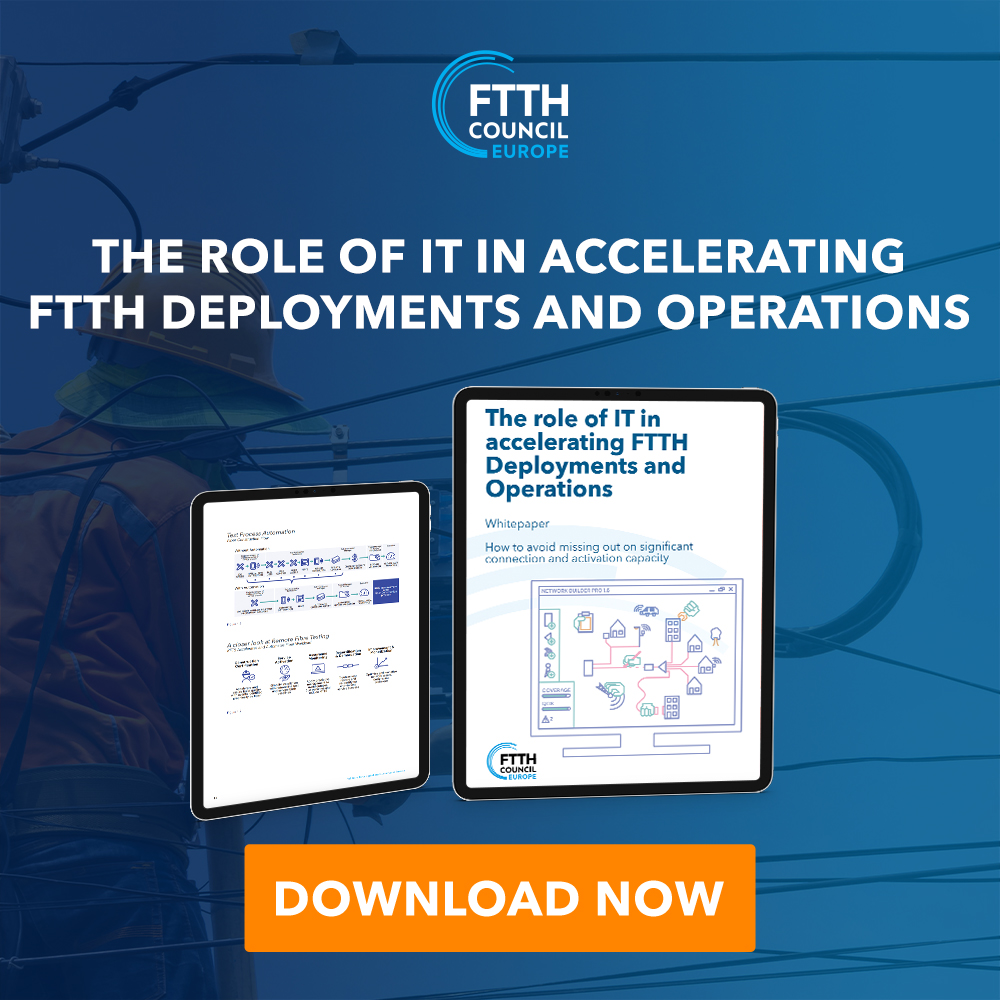
I always like to address FTTH deployments by navigating across the network deployment lifecycle: Plan, Design, Build, Operate, and Maintain. Removing the challenges that come with manual processes and implementing process and workflow automation across those phases is key to optimizing and accelerating network deployments. To name one example, the use of Geographic Information Systems (GIS) for planning and managing deployments allows for more precise and efficient network designs. If you want more insights about this topic have a look at the D&O committee whitepaper published last year that specifically addresses this area: “The role of IT in accelerating FTTH Deployments and Operations”.

Moreover, continuous innovations in areas like deployment techniques and passive components connectivity continue to play a huge role in accelerating and simplifying FTTH deployments. What I particularly find impactful are those innovations that revolve around reducing the dependency on highly skilled labor, enabling failure-free and first-time right faster installation practices. Micro-trenching, direct buried compact cables/fiber bundles, and pre-connectorized hardened solutions are a few field-proven examples. Last but not least, innovative ideas around network sharing on different layers to create an Open Access business model would help reduce deployment overbuild and offer a strategic approach to optimize resources, reduce costs and environmental impacts, and accelerate network rollout.


What is the profile of the Member companies joining the Deployment & Operations Committee?
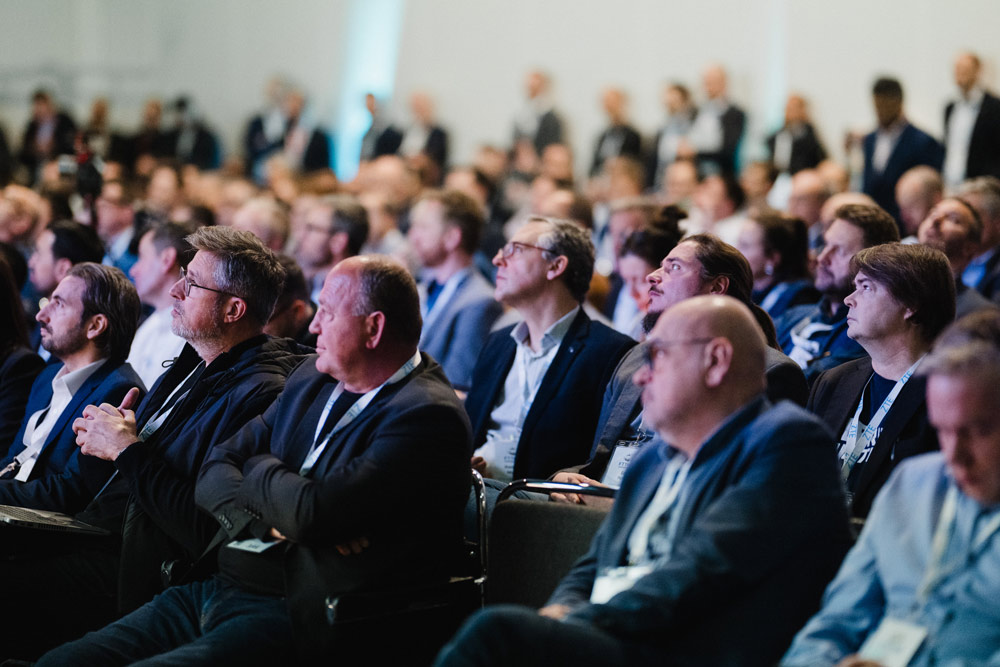
I want to describe the majority of the members of the FTTH Council Europe: I would say it typically comprises a diverse range of member companies, including telecommunications operators, service providers, network equipment/ passive components manufacturers, solution providers, etc. If we focus on the Deployment & Operations committee itself, the most active members are from the solution providers group who continuously thrive to address technological advancements and innovations to overcome common challenges in FTTH rollouts. I want to use this opportunity to encourage operators and service providers to use the Deployment & Operations platform to share their knowledge and experience and present their best practices in the deployment and operation of fiber networks.

In the picture on the left, action from the Deployment & Operations Committee workshop at the FTTH Conference 2024, in Berlin.


What are the key differences in deploying fibre networks in urban versus rural areas and how does your approach vary between these environments?
The FTTH Council Europe's mission and goal is to accelerate FTTH deployments and enable every European citizen to have access to high-speed broadband connectivity, basically full fiber to everyone, everywhere. In order to get to this goal, FTTH deployments needs to expand far beyond urban and suburban areas and efficiently reach rural and ultra rural areas.

Deploying fibre networks in urban areas typically differs compared to rural areas in terms of challenges to overcome, solutions utilized, and business case justification. In urban environments, the primary challenges consist of building a network in a dense infrastructure, obtaining permits, and minimizing disruptions to existing services. The higher population density in urban areas leads to a higher take rate, meaning more subscribers per km of fiber, which reduces the costs of deployment per home passed (HP) and home connected (HC).

In contrast, rural deployments face challenges such as longer distances between connections, lower population density, and difficult terrain which means that fiber deployment reaches far fewer subscribers per km, making it less economically viable.

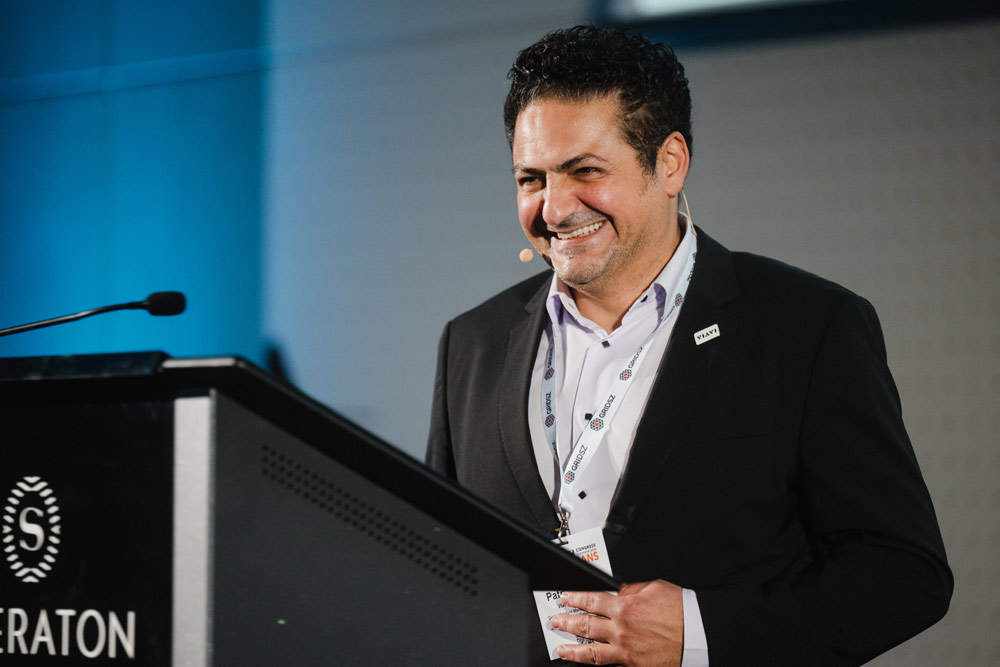
In the picture on the right, Patrick Faraj is moderating the "FTTH Technologies for the Balkans" panel session at the FTTH Congress 2024, in Dubrovnik.


More about Patrick Faraj

Patrick Faraj is currently VIAVI’s Global Product Manager managing an end-to-end SW and HW Centralized OTDR Test Solution that is designed to optimize the qualification and certification of FTTx networks across all phases of the deployment lifecycle. Patrick is a proven subject matter expert in solutions/products development, value propositions creation, and deployment practices in global FTTx networks and markets, with more than 16 years extensive product management experience including 13 years of Global Product Management in FTTX passive solutions at Corning,  Prior to his industry engagement, Patrick worked for 5 years as a research and teaching assistant at the university of Kiel, Germany, at the Chair of Telecommunications with focus on fibre optic transmission research topics. Patrick holds a Bachelor of Science degree in Electronics and Telecommunications Engineering and a Master of Science in Telecommunications from Riga Technical University in Latvia.


Green Home Solution for Sustainability Targets

Member company: Huawei
Country or geographical scope: Global
Company type: Vendor/Reseller
Product/service category involved: ONT for FTTX

Abstract

Copper Migration to FTTx is already the consensus of telecom industry, now as the latest solution, FTTR (Fiber To The Room) extends the fiber to each room and allows users to enjoy stable gigabit connections and seamless roaming throughout the house, furthermore, it can also bring significant power saving and emission reduction value to the end users, indirectly to the operator, we call it green home solution. Based on Huawei practice, we found out each FTTR ONT uses only 0.37 kWh per day and saves 38.5 kWh every year comparing to traditional ONT plus repeaters, that is, the green and environment-friendly design enables users to enjoy better network experience with 20% less power consumption. In 2020, Huawei FTTR ONTs (OptiXstar series) are in service in more than 40 million households worldwide, saving over 1.5 billion kWh of electricity and reducing CO2 emissions by more than 730,000 tons, equivalent to planting more than 30 million trees.


Context

High-speed broadband service applications continue to emerge, and innovative services such as ultra-high-definition online video, online education, and telecommuting place higher and higher requirements on network bandwidth, latency, and jitter, driving users' demand for broadband packages to move upward,and further lead to the accelerated development of fiber-optic broadband networks. However, a large-scale survey found that limited by the network defects of the home information network, the high-bandwidth package service capabilities provided by the operators have not been fully utilized, and there is a situation of "1000MB home access is easy, but 100MB room access is difficult".

Solutions

In order to solve the problem of home network, the industry has proposed a new generation of home networking technology based on optical fiber - FTTR (Fiber to the Room). The FTTR all-optical Wi-Fi solution directly extends the optical fiber to each room, which can achieve more than gigabit coverage in the whole house. It is the key to building a high-quality home information infrastructure and indicates the development direction of gigabit home networking.

Results

Compared to conventional fixed broadband access technologies, full-fiber-based FTTR internet access is based on the innovative technologies that enable consume less energy and reduce the dependence on non-renewable resources like copper to achieve the reduction of carbon footprint target. Based on the passive nature of PON network architecture, fiber-based network enables to save energy consumption up to 30% than the traditional copper-based network cable. In addition, because of physical features of fiber cable, such as more durable and less susceptible to harsh environmental conditions as well as lightweight and compact in size (the size of fiber cable is only 15% of traditional copper cable), there is no need to replace the existing indoor optical fiber cable when upgrading the network. A full-fiber network can save mineral resource use and waste, reducing climate and environmental risks.

Last but not least, with FTTR, the master optical modem of each line integrates the functions of optical modem and WIFI router to reduce the number of electronic devices in use whilst saving energy consumption by 50%. The annual energy consumption saving of a typical master optical modem can reach 105 KWh per year. In addition, the power consumption of panel type slave modem is also ultra-low, barely 1 KWh of electricity for 5 days. Each slave modem can save 38 KWh per year, reducing 30% of power consumption than traditional modem.

Conclusions

Copper Migration to FTTx is already the consensus of telecom industry, now as the latest solution, FTTR (Fiber To The Room) extends the fiber to each room and allows users to enjoy stable gigabit connections and seamless roaming throughout the house, furthermore, it can also bring significant power saving and emission reduction value to the end users, indirectly to the operator, we call it green home solution. Based on Huawei practice, we found out each FTTR ONT uses only 0.37 kWh per day and saves 38.5 kWh every year comparing to traditional ONT plus repeaters, that is, the green and environment-friendly design enables users to enjoy better network experience with 20% less power consumption. In 2020, Huawei FTTR ONTs (OptiXstar series) are in service in more than 40 million households worldwide, saving over 1.5 billion kWh of electricity and reducing CO2 emissions by more than 730,000 tons, equivalent to planting more than 30 million trees.

Further reading 

Huawei OptiXstar ONT and FTTR Video link: https://www.youtube.com/watch?v=0FVc9RvwtMk


Help us create a brighter future!

Join the Fibre Council Europe
today and benefit from Europe’s
largest ecosystem of fibre players