In-Home Broadband Excellence Committee


Maarten Egmond, Chair of the In-Home Broadband Excellence Committee of the FTTH Council Europe, dives into one of the most crucial yet often overlooked aspects of fiber deployment: the quality of the broadband experience inside the home. In this episode, Maarten discusses why in-home broadband excellence has become strategically essential for Communication Service Providers (CSPs) and how it ties directly into broader fiber deployment goals across the European Union.
In this episode, our guest will answer to these questions and much more:

  1. Why is in-home broadband excellence strategically relevant for CSPs, and how does it relate to fibre network deployment strategies in the European Union?
  2. From the experience of your committee, what are the best practices to provide, manage and monitor the ‘Quality of Experience’ for end-users?
  3. What are the key factors driving fibre adoption among consumers?
  4. What new technologies or innovations is the committee exploring to enhance in-home broadband experiences?

Read the full interview below to get the answers to these questions.


Why is in-home broadband excellence strategically relevant for CSPs, and how does it relate to fibre network deployment strategies in the European Union?  

As we saw at the FTTH Conference in March, fibre rollout is steadily continuing, but will need additional investment to close the remaining gap. This investment ultimately has to come from paying subscribers, but the adoption remains lagging. If the in-home broadband experience is not addressed well, subscribers will not be able to benefit from the inherent quality of the fibre connection, and they will not see the need to adopt it.
The fact that so many homes connected stay ‘unadopted’ is a serious threat to the future of a digital Europe where everyone should have access to Gigabit connectivity (and beyond). And delivering ‘In-Home Broadband Excellence’ is the answer to that threat.


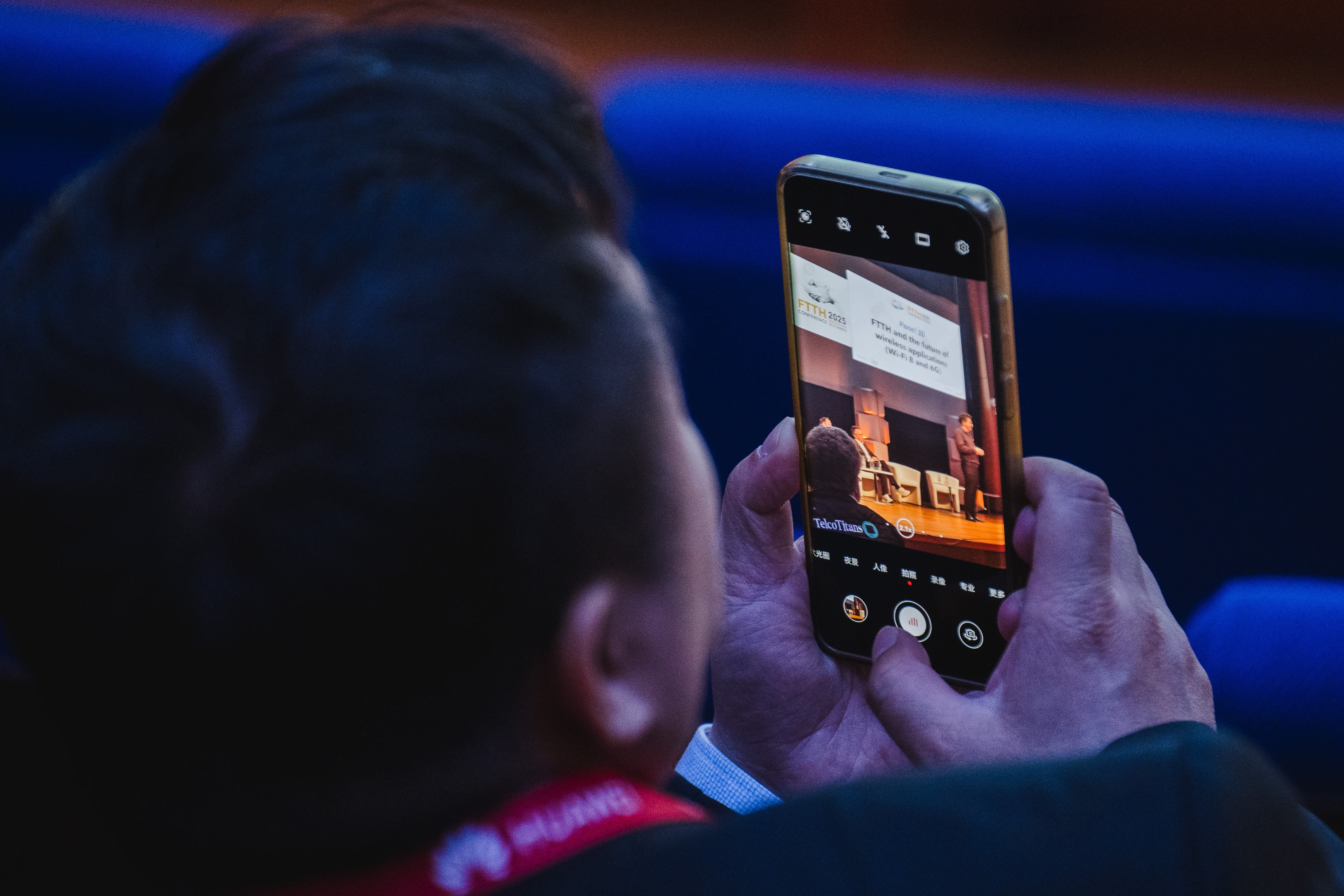
In the picture on the left, action from the Panel 10 - FTTH and the future of wireless applications (Wi-Fi 8 and 6G) at the FTTH Conference 2025, in Amsterdam.


From the experience of your committee, what are the best practices to provide, manage and monitor the ‘Quality of Experience’ for end-users?


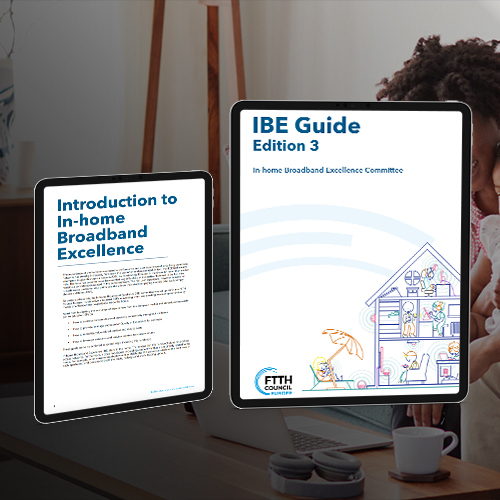
This is a tough question to answer. There are so many things to address, from the basic infrastructure in the home, to ensuring the CSP can manage that infrastructure to help the end-users where needed, to technologies to deploy new services for additional revenue, and indeed to unlock real subscriber value that can only be delivered over fibre efficiently. For this reason, we have just released the third edition of the IBE Guide, which addresses all these topics and more. For the first time, this edition also brings content for the technicians that do the in-home installation. Many service providers choose to send a technician, to have a human touch-point with the subscriber. However, ensuring the technicians are equipped to do a high quality installation requires additional knowledge and training compared to what is typically done today.

Perhaps my conclusion on the overall best practices is especially: adopt standards and technologies that already exist. We have a habit to quickly skip over to the next ‘silver bullet’ (for example the generative-AI hype currently ongoing), but we forget there are many things that we can do with available down-to-earth technology that are not yet even implemented in many networks to the fullest.


What are the key factors driving fibre adoption among consumers?
European consumers are typically very price conscious, and this can be an issue as fibre is not usually a cheaper subscription. But in my opinion Europeans aren’t adverse to paying for value. In the beginning, fibre deployments could be marketed locally in effective ways. But in the mass-market, if consumers don’t perceive they get more value out of the fibre connection than what they already have, they will be reluctant to switch, especially since fibre is unlikely to be a cheaper subscription for them.

Well implemented fibre networks are of high quality, and subscribers will know. As we still await growth of new consumer services that truly and honestly require fibre connectivity, quality of the network remains the key driving factor. And this can be best influenced by taking care during deployment and initial installation. This is exactly why the committee is now focused on providing more value to CSPs in that process.


In the picture on the left, action from the Panel 10 - FTTH and the future of wireless applications (Wi-Fi 8 and 6G) at the FTTH Conference 2025, in Amsterdam.
 

What new technologies or innovations is the committee exploring to enhance in-home broadband experiences?

We’ve just seen Wi-Fi 7 released, as a major upgrade to the quality of the in-home broadband experience. Of course it will take many years to fully mature and ‘trickle down’ into most end-user devices so it is something to continue monitoring and expanding on. On a related note, while mesh networking is not exactly ‘new’ anymore, it remains of interest to deploy it more effectively, perhaps coupled with other improvements to the (initial) in-home installation quality. The latter isn’t exactly a new technology or innovation in most senses of the word, but as I mentioned above, it could actually be one of the best ways to enhance the in-home broadband experience over the next few years. Hopefully Wi-Fi usage in the 6GHz band will be expanded in Europe as well, so that in a few years, we could finally say we have achieved the solution to In-home Broadband Excellence, once and for all. Of course we all know it’s not quite going to be like that, but we have something to aspire to, and we can certainly get a lot closer than where we are today!


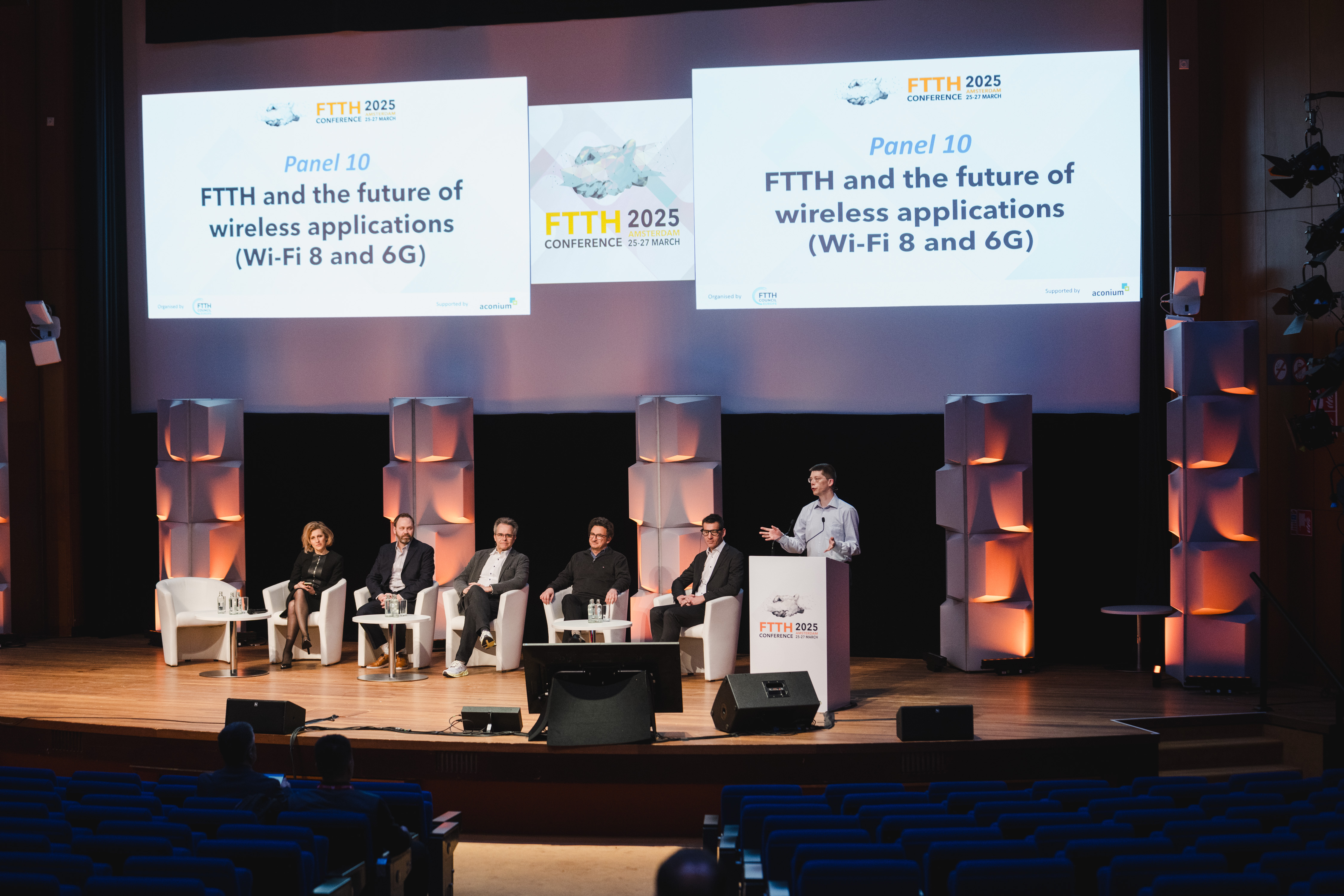
In the picture on the right, Maarten Egmond is moderating the Panel 10 - FTTH and the future of wireless applications (Wi-Fi 8 and 6G) at the FTTH Conference 2025, in Amsterdam.


More about Maarten Egmond


Maarten Egmond finished university with a double BSc in IT as well as applied physics and started his career in R&D of optical components, followed by embedded software development work for high-end X-ray machines. After this, he moved into the FTTH industry where he has been contributing to technology and product development for more than 15 years, currently serving as CTO of Genexis, and since 2021 as Committee Chair of In-Home Broadband Excellence for the FTTH Council Europe.

Strategic Plan 2025–2026: Enhancing the FTTH Council Europe's Market Intelligence Committee

The FTTH Council has outlined its strategic guidelines for the coming years, starting with the renewal of its crucial agreement with Idate for 2026–2028. This agreement significantly strengthens our commitment to providing top-tier market intelligence, which is vital for driving fibre optic adoption across Europe as part of our 2025–2026 Strategic Plan.

This new agreement builds on our successful collaboration with several key enhancements:

  • Enhanced Quality Assurance: To minimise revisions and ensure the highest standards, we are introducing a dedicated quality manager. This new role, coupled with stricter upfront checks, will demand even greater precision from Idate in dataset construction and summary presentations. Idate is fully committed to this, and the agreement includes a robust plan to verify all data sources, along with a dedicated project manager to oversee all reporting activities, ensuring consistency and accuracy.
  • Expanded Regional Coverage: For the first time, we are structurally integrating four Balkan countries into our reporting. This expansion will provide a more comprehensive view of the European FTTH landscape.
  • Streamlined Reporting & Bundling: The layout of our reports will be revised to create a single, comprehensive bundle of all produced reports. This will offer members easier access to a complete suite of insights, making our data even more accessible.

Our overarching objective remains clear: to significantly increase report downloads and leverage them as a primary tool to enhance the FTTH Council’s visibility and influence. Achieving this requires active, localised support from all Committee members.


Empowering Dissemination and Local Impact

We are committed to working with all Market Intelligence Committee (MIC) members to ensure wider dissemination of the valuable work we do. This means:

  • Leveraging Promotional Resources: We encourage you to use the promotional resources provided by the Council to share our insights broadly.
  • Active Promotion and Citation: Actively identify opportunities to promote, share, and cite data and insights from MIC reports within your countries and professional networks. This includes presenting at local industry events, incorporating data into company presentations, referencing findings in articles, and sharing on social media.
  • Championing Assets Locally: Become an advocate for the FTTH Council’s market intelligence within your national markets and organisations, proactively promoting and disseminating MIC reports and findings.
  • Strengthening Inter-Committee Collaboration: A key objective for 2025–2026 is to foster stronger relationships with other FTTH Council committees, particularly the Investors Committee. By enhancing collaboration, we aim to ensure our market intelligence directly supports and informs investment strategies within the fibre ecosystem.

These initiatives, combined with your active participation and strengthened inter-committee collaboration, will be instrumental in reinforcing the FTTH Council’s position as the leading authority on fibre-to-the-home deployment and trends.


Help us create a brighter future!

Join the Fibre Council Europe
today and benefit from Europe’s
largest ecosystem of fibre players