Episode 4: the Investors Committee


Thomas Miller, Chair of the Investors Committee of the FTTH Council Europe, shares his perspective on the evolution of the FTTH business in the months to come. While providing guidance to those willing to navigate their way to profitable investments in full-fibre networks, Thomas also presents some of the activities we can expect from the committees in the near future. In this episode, our guest will answer to these questions and much more:

  1. How do you see FTTH investments in Europe evolving in the next 12 months?
  2. From an investor perspective, what are the key factors you keep into account while assessing fibre networks financing?
  3. It looks like financing fibre optics is becoming more difficult nowadays: how can investors and entrepreneurs successfully navigate their way to profitable investments?
  4. What can you tell us about the upcoming initiatives from the Investors Committee?

Read the full interview below to get the answers to these questions.


How do you see FTTH investments in Europe evolving in the next 12 months?

Over the past decade, the European fibre sector has attracted billions of euros in investment. Thus, many investors have built up large exposures in the fiber sector, often to their limit. Which is a technical reason why the market for fibre investment in 2023 has become more challenging. More importantly, the mentality of "build and they will come" is clearly outdated. In some regions, providers are struggling to meet their economic targets.  

Overall, investors are taking a much closer look at fibre operators than they were a year ago. This makes it difficult for some providers to raise the funds they need.

Existing players may have to rethink their growth strategy and think about cooperating with competitors or even cutting costs and optimizing processes. In the UK and Germany in particular, we are likely to see more restructuring. Mergers, acquisitions, and joint ventures will enter the stage. It’s climate change, if you will. 

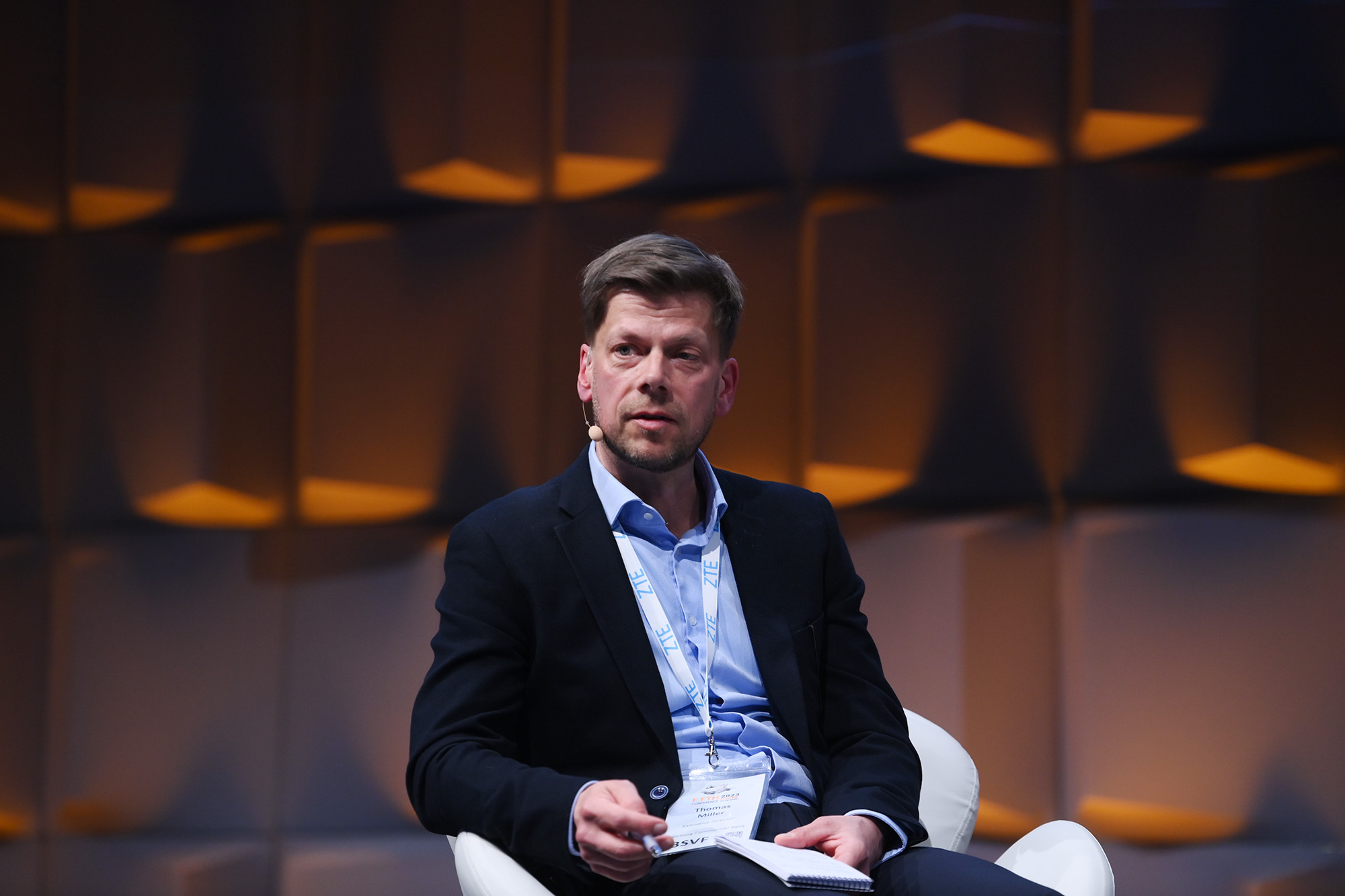
In the picture on the right, Thomas Miller moderating "Panel 5 - Investors Panel" during the FTTH Conference 2023 in Madrid.

From an investor perspective, what are the key factors you keep into account while assessing fibre networks financing?

Clearly, investors require a good track record. The focus is much more on ARPU and how many of the homes passed have actually signed up. Speaking of “homes passed”, this KPI has lost much of its relevance. If anything, investors are looking at “RFS” (“ready for service”). But, to reiterate a key fact, investors are paying much more attention to cash generation today than they did in 2022, which means greenfield investments (i.e., investments with no track record) are often off the radar.

Investors are also much more aware of vendors' business models, especially when comparing wholesale to retail. They also value providers adapting to the "climate change" that has gripped the fiber landscape. This means some are likely to support reasonable plans on how to successfully address the challenges ahead. Such support may include short-term extensions of debt or accommodating waiver requests.

It looks like financing fibre optics is becoming more difficult nowadays: how can investors and entrepreneurs successfully navigate their way to profitable investments?

I didn't mean to sound overly pessimistic. Fibre is a key technology for Europe, we need this infrastructure. There is therefore no doubt that we will manage the roll-out overall. Like in every dynamic market opinions, strategies and forecasts are diverging more strongly. In such an environment, it is essential to base decisions on a solid foundation of good information.

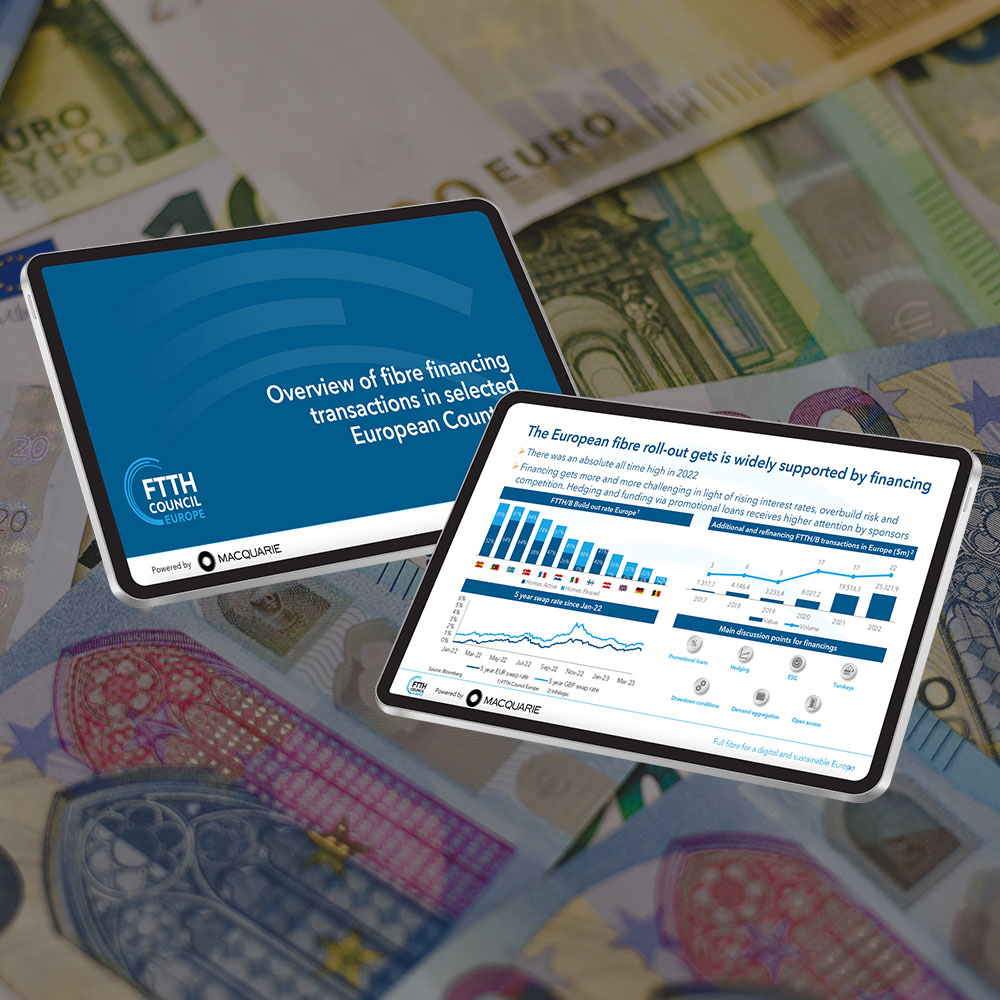
The Investors Committee would like to contribute to this with our Investment Tracker, which we produce twice a year together with Macquarie. In it, we show current developments in credit volumes, interest rates, KPIs, covenants and information requirements for the main European regions.

In addition, our Guide to Successful Fibre Business Models provides a good overview of the business models relevant on the market. These differ significantly in terms of opportunities and risks and thus in the structure of an investment.


What can you tell us about the upcoming initiatives from the Investors Committee?

It is certainly not easy to keep track of things in the current environment. But that is precisely why our approach is not fatalistic. We firmly believe that the future can be shaped. To this end, it is more important than ever that entrepreneurs and investors talk to each other. We have our Investors Committee for this exchange. With the Investment Tracker and the Guide to Successful Fibre Business Models, we continue to produce decision-relevant information. However, sensemaking is also important, and that is what we do in the dialog between our committee members.


More about Thomas Miller


Since 2006 at Hamburg Commercial Bank, Executive Director. Publisher of several studies on fiber financing. Writer and speaker for bank financing. University lecturer at Hamburg School of Business Administration and International School of Management. Head of the FttH Council Investors Forum.


Use of a ground water heat pump (GWHP) to cool FTTx street cabinets

Member company: Eurofiber
Country or geographical scope: Global
Period: 2015-
Segment of the value chain concerned: Internet service provider
Product/service category involved: Street Cabinets

Abstract:
ISP’s can achieve significant reductions in their energy usage, and thereby reduce their greenhouse gas emissions, by switching to GWHPs to cool their street cabinets, rather then using conventional air conditioning. In addition GWHPs require less maintenance reducing the amount of truck rolls needed for service.


Context

As a sector we are well aware that every party has a responsibility to reduce their carbon footprint. Digital services are often a way to reduce the need for travel or transport of physical goods. However digitization itself is not currently free of its own impact on the environment. Therefor as a sector we must act to reduce our own footprint as well. We cannot however do this alone and we believe that by sharing best practices we can help and inspire others to go beyond their current efforts, ultimately to the benefit of all society.
 

Solutions

Active equipment used by the broadband service can require cooling to ensure uninterrupted service. Traditionally this has been done by using conventional air conditioning. This is an effective method of cooling, however it requires addition power, and thus carbon emissions. An alternative that has been used by Eurofiber for its street cabinets is to cool them by using a ground water heat pump (GWHP) instead. What a GWHP does is to keep the air in the street cabinet stable by pumping up ground water from a well deep in the earth. The temperatures there are relatively stable at around 15 °Celsius year round. By pumping this water through a heat exchanger the GWHP can cool during the summer and provide heat during the winter, which also eliminates the need for a separate heater. A GWHP has a very low energy consumption and requires little maintenance, which reduces their footprint further by reducing the amount of truck rolls.


Results

Eurofiber has been able to use GWHP systems to cool some of their street cabinets. Given the need to dig fairly deep to reach ground water of the correct temperature this is not always feasible. Where it is possible it works very well though, energy consumption at peak is only 3% of what a conventional air conditioned street cabinet would use and maintenance costs are much lower, making it an ideal solution.
 

Conclusions

As enablers of digitization the broadband sector is already doing much to help other reduce their footprint. We must however as a sector do more and also look at our own footprint. An important step in this is the transition to full fiber networks. However even fiber networks use active equipment that requires cooling. The example of using ground water heat pumps is an example of how we can reduce our own carbon footprint by both reducing our energy usage and reducing the need for maintenance.

More episodes from this series


Help us create a brighter future!

Join the Fibre Council Europe
today and benefit from Europe’s
largest ecosystem of fibre players