Episode 4: the Investors Committee


Thomas Miller, Chair of the Investors Committee of the FTTH Council Europe, shares his perspective on the evolution of the FTTH business in the months to come. While providing guidance to those willing to navigate their way to profitable investments in full-fibre networks, Thomas also presents some of the activities we can expect from the committees in the near future. In this episode, our guest will answer to these questions and much more:

  1. How do you see FTTH investments in Europe evolving in the next 12 months?
  2. From an investor perspective, what are the key factors you keep into account while assessing fibre networks financing?
  3. It looks like financing fibre optics is becoming more difficult nowadays: how can investors and entrepreneurs successfully navigate their way to profitable investments?
  4. What can you tell us about the upcoming initiatives from the Investors Committee?

Read the full interview below to get the answers to these questions.


How do you see FTTH investments in Europe evolving in the next 12 months?

Over the past decade, the European fibre sector has attracted billions of euros in investment. Thus, many investors have built up large exposures in the fiber sector, often to their limit. Which is a technical reason why the market for fibre investment in 2023 has become more challenging. More importantly, the mentality of "build and they will come" is clearly outdated. In some regions, providers are struggling to meet their economic targets.  

Overall, investors are taking a much closer look at fibre operators than they were a year ago. This makes it difficult for some providers to raise the funds they need.

Existing players may have to rethink their growth strategy and think about cooperating with competitors or even cutting costs and optimizing processes. In the UK and Germany in particular, we are likely to see more restructuring. Mergers, acquisitions, and joint ventures will enter the stage. It’s climate change, if you will. 

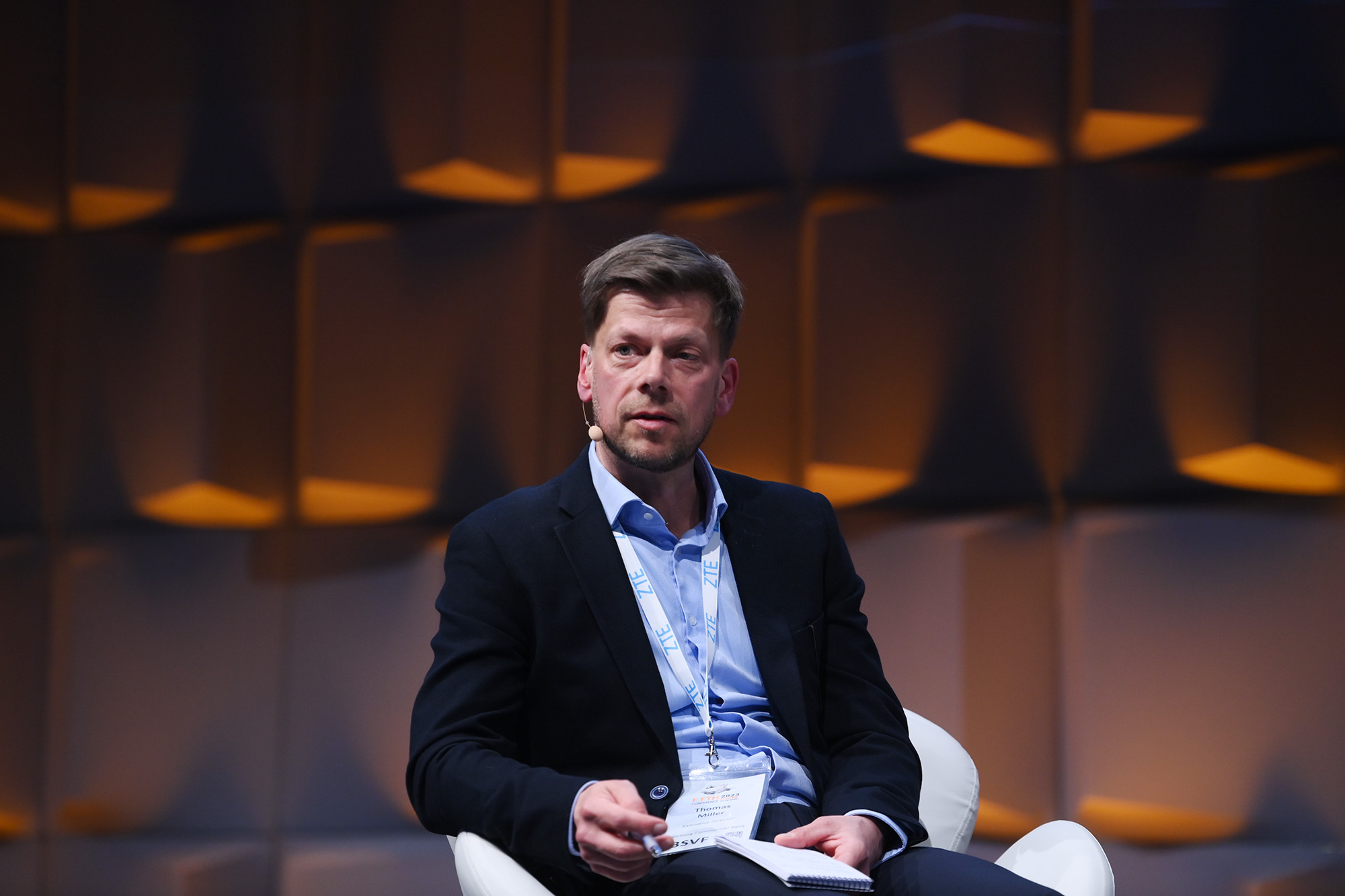
In the picture on the right, Thomas Miller moderating "Panel 5 - Investors Panel" during the FTTH Conference 2023 in Madrid.

From an investor perspective, what are the key factors you keep into account while assessing fibre networks financing?

Clearly, investors require a good track record. The focus is much more on ARPU and how many of the homes passed have actually signed up. Speaking of “homes passed”, this KPI has lost much of its relevance. If anything, investors are looking at “RFS” (“ready for service”). But, to reiterate a key fact, investors are paying much more attention to cash generation today than they did in 2022, which means greenfield investments (i.e., investments with no track record) are often off the radar.

Investors are also much more aware of vendors' business models, especially when comparing wholesale to retail. They also value providers adapting to the "climate change" that has gripped the fiber landscape. This means some are likely to support reasonable plans on how to successfully address the challenges ahead. Such support may include short-term extensions of debt or accommodating waiver requests.

It looks like financing fibre optics is becoming more difficult nowadays: how can investors and entrepreneurs successfully navigate their way to profitable investments?

I didn't mean to sound overly pessimistic. Fibre is a key technology for Europe, we need this infrastructure. There is therefore no doubt that we will manage the roll-out overall. Like in every dynamic market opinions, strategies and forecasts are diverging more strongly. In such an environment, it is essential to base decisions on a solid foundation of good information.

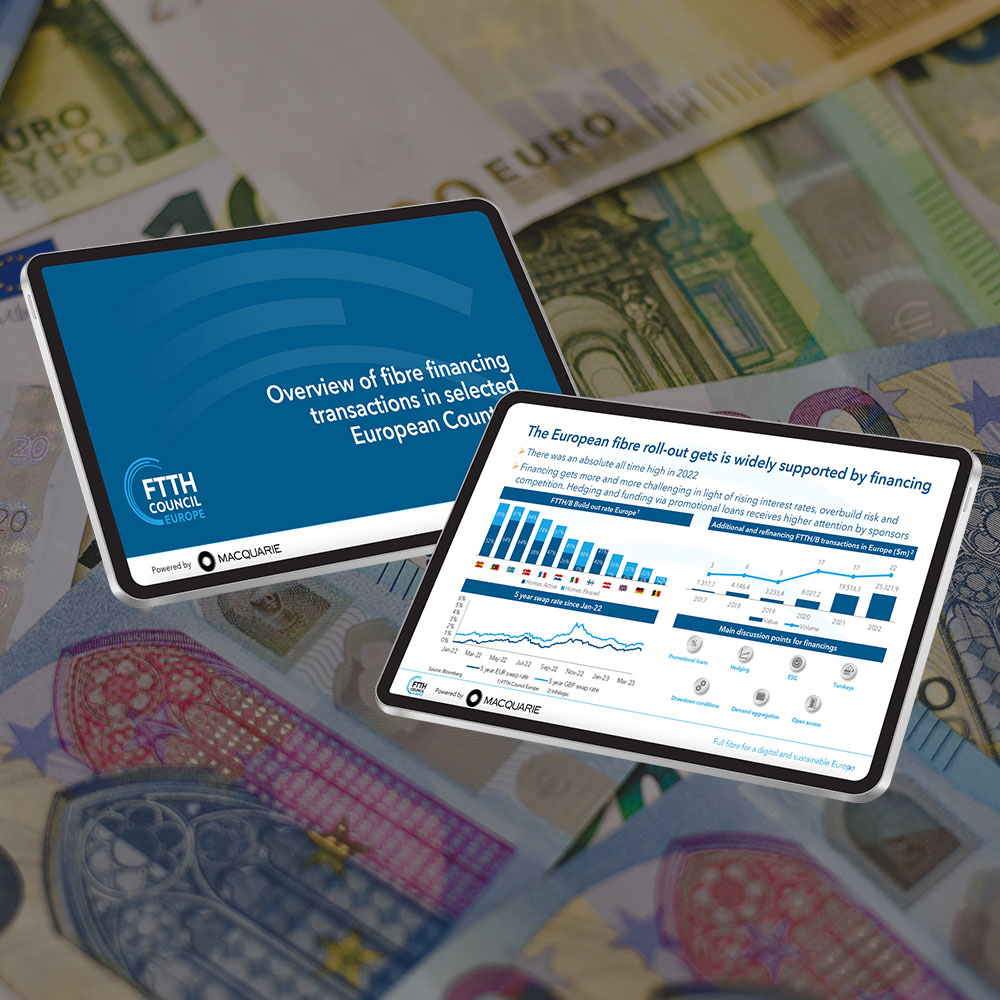
The Investors Committee would like to contribute to this with our Investment Tracker, which we produce twice a year together with Macquarie. In it, we show current developments in credit volumes, interest rates, KPIs, covenants and information requirements for the main European regions.

In addition, our Guide to Successful Fibre Business Models provides a good overview of the business models relevant on the market. These differ significantly in terms of opportunities and risks and thus in the structure of an investment.


What can you tell us about the upcoming initiatives from the Investors Committee?

It is certainly not easy to keep track of things in the current environment. But that is precisely why our approach is not fatalistic. We firmly believe that the future can be shaped. To this end, it is more important than ever that entrepreneurs and investors talk to each other. We have our Investors Committee for this exchange. With the Investment Tracker and the Guide to Successful Fibre Business Models, we continue to produce decision-relevant information. However, sensemaking is also important, and that is what we do in the dialog between our committee members.


More about Thomas Miller


Since 2006 at Hamburg Commercial Bank, Executive Director. Publisher of several studies on fiber financing. Writer and speaker for bank financing. University lecturer at Hamburg School of Business Administration and International School of Management. Head of the FttH Council Investors Forum.


Use of recycled plastics in CPEs (Customer-premises equipment)

Member company: Genexis
Country or geographical scope: Global
Period: 2018 onwards
Company type: Vendor/Reseller
Product/service category involved: CPEs

Abstract

CPE equipment vendors can limit or even abandon the use of virgin plastics in the housing of their CPE products, by using recycled plastics instead. This has a positive impact on the circular economy, where materials can be reused. Recycled plastics material is easier and more cost-efficient to obtain in darker colors, so in practice using recycled plastics often means the products will have a black color.


Context

Policies and agreements like The Paris Agreement are driving the adoption of more sustainable products and processes. From multiple angles there is more pressure and need to reduce our environmental footprint and therewith limit global warming. This also applies to the FTTH market. The whole value chain, ranging from end-users to operators/ISPs and suppliers, is demanding for more sustainable products and solutions.

There are many aspects of sustainability, but maybe the most well-known one is recycling. With recycling, waste materials are converted into new materials. Meaning there is no need of virgin materials, while the waste materials get a new life. Recycling is nowadays widely applied for plastic packaging, but still less in products. This is a missed opportunity since this is also a feasible solution for plastic products housings of CPE equipment.
 

Solutions

Today, most plastics suppliers provide solutions for using recycled plastics in product housings for CPE equipment. The recycled plastics can offer the same specifications compared to virgin materials, while the cost difference is relatively small. This cost difference depends however on the color of recycled plastics: to obtain a white/light color, lighter color types of plastics need to be filtered out from waste streams, which is a labor-intensive task and therefore more expensive. In addition, it is more difficult to achieve a fully smooth white product surface. Hence, in practice we see that most of the recycled plastics in CPE products are black. This keeps the cost impact under control, while simplifying the recycling process and ensuring an evenly colored product surface.
 

Results

By implementing recycled plastics in its CPE portfolio, Genexis achieved multiple results. One example is a custom-made product for KPN, the Tier-1 network operator in the Netherlands. One of KPN’s goals is to use almost 100% reusable materials by 2025. To support KPN in this goal, Genexis developed a Network Terminator (NT) which uses >98% recycled plastics for the products housing.

According to the results of a professional Product Circularity Report, besides the recycled housing a total of 56% of the materials used in the NT can, in theory, be recycled. Furthermore, the NT is well designed for disassembly and almost all connections are accessible. This results in high levels of component recovery. For all details, please refer to the Product Circularity Report that can be found here.
 

Conclusions

Recycling is very common for plastic packaging, but unfortunately less common for CPEs so far. This is a missed opportunity, since recycled plastic materials are widely available with similar specifications and at similar pricing levels compared to virgin plastics. Achieving white recycled plastics out of a wide color range of waste streams is a challenge however, therefore we see a trend of an increasing number of black CPEs in the market. The question is whether operators, ISPs and end-users will accept this, but hopefully this will not be a blocking factor in making CPEs more sustainable.
 

Contact

Martijn Rooijakkers, Sr. Commercial Product Manager, Genexis
m.rooijakkers@genexis.eu

More episodes from this series


Help us create a brighter future!

Join the Fibre Council Europe
today and benefit from Europe’s
largest ecosystem of fibre players