Episode 4: the Investors Committee


Thomas Miller, Chair of the Investors Committee of the FTTH Council Europe, shares his perspective on the evolution of the FTTH business in the months to come. While providing guidance to those willing to navigate their way to profitable investments in full-fibre networks, Thomas also presents some of the activities we can expect from the committees in the near future. In this episode, our guest will answer to these questions and much more:

  1. How do you see FTTH investments in Europe evolving in the next 12 months?
  2. From an investor perspective, what are the key factors you keep into account while assessing fibre networks financing?
  3. It looks like financing fibre optics is becoming more difficult nowadays: how can investors and entrepreneurs successfully navigate their way to profitable investments?
  4. What can you tell us about the upcoming initiatives from the Investors Committee?

Read the full interview below to get the answers to these questions.


How do you see FTTH investments in Europe evolving in the next 12 months?

Over the past decade, the European fibre sector has attracted billions of euros in investment. Thus, many investors have built up large exposures in the fiber sector, often to their limit. Which is a technical reason why the market for fibre investment in 2023 has become more challenging. More importantly, the mentality of "build and they will come" is clearly outdated. In some regions, providers are struggling to meet their economic targets.  

Overall, investors are taking a much closer look at fibre operators than they were a year ago. This makes it difficult for some providers to raise the funds they need.

Existing players may have to rethink their growth strategy and think about cooperating with competitors or even cutting costs and optimizing processes. In the UK and Germany in particular, we are likely to see more restructuring. Mergers, acquisitions, and joint ventures will enter the stage. It’s climate change, if you will. 

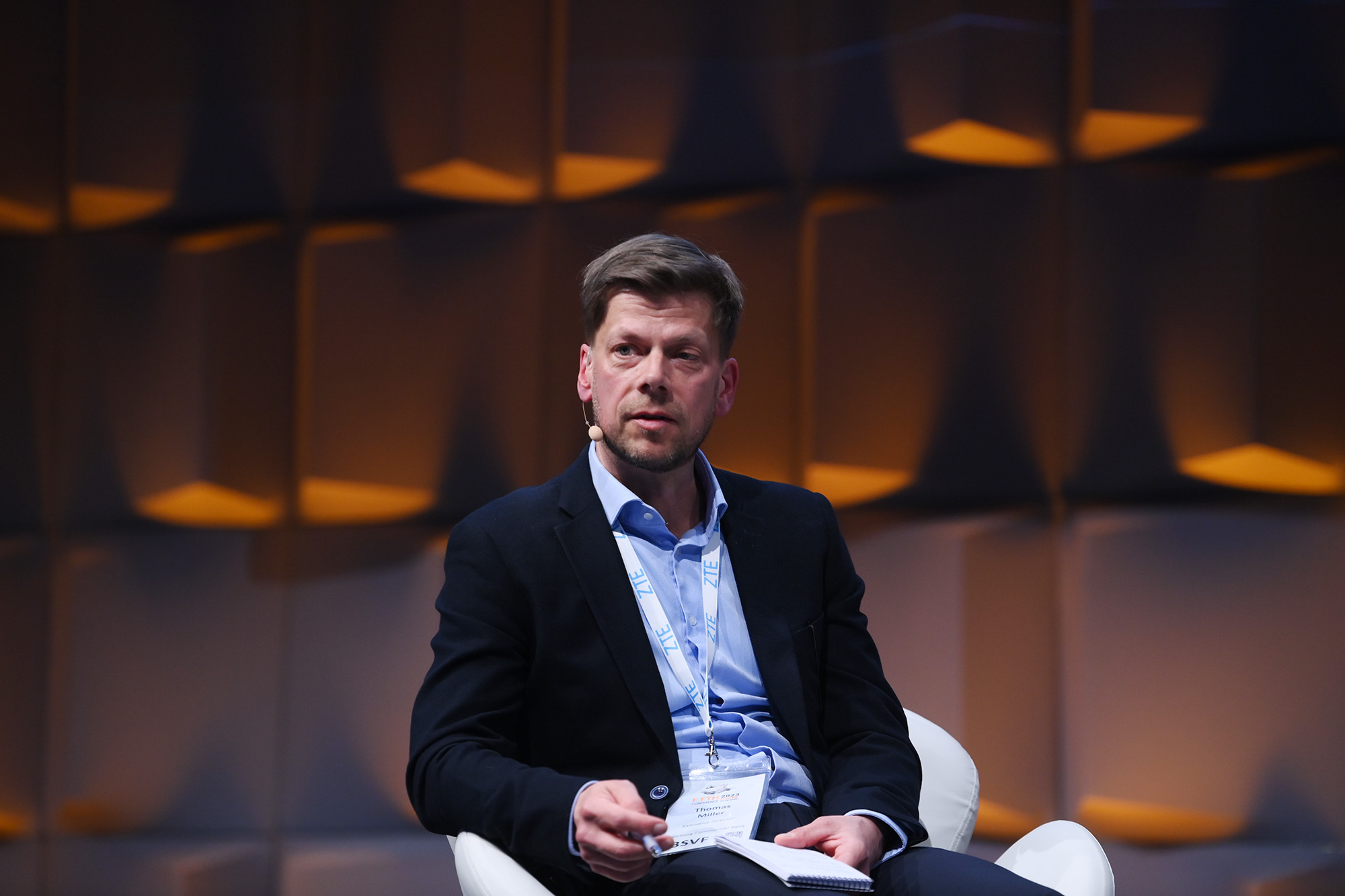
In the picture on the right, Thomas Miller moderating "Panel 5 - Investors Panel" during the FTTH Conference 2023 in Madrid.

From an investor perspective, what are the key factors you keep into account while assessing fibre networks financing?

Clearly, investors require a good track record. The focus is much more on ARPU and how many of the homes passed have actually signed up. Speaking of “homes passed”, this KPI has lost much of its relevance. If anything, investors are looking at “RFS” (“ready for service”). But, to reiterate a key fact, investors are paying much more attention to cash generation today than they did in 2022, which means greenfield investments (i.e., investments with no track record) are often off the radar.

Investors are also much more aware of vendors' business models, especially when comparing wholesale to retail. They also value providers adapting to the "climate change" that has gripped the fiber landscape. This means some are likely to support reasonable plans on how to successfully address the challenges ahead. Such support may include short-term extensions of debt or accommodating waiver requests.

It looks like financing fibre optics is becoming more difficult nowadays: how can investors and entrepreneurs successfully navigate their way to profitable investments?

I didn't mean to sound overly pessimistic. Fibre is a key technology for Europe, we need this infrastructure. There is therefore no doubt that we will manage the roll-out overall. Like in every dynamic market opinions, strategies and forecasts are diverging more strongly. In such an environment, it is essential to base decisions on a solid foundation of good information.

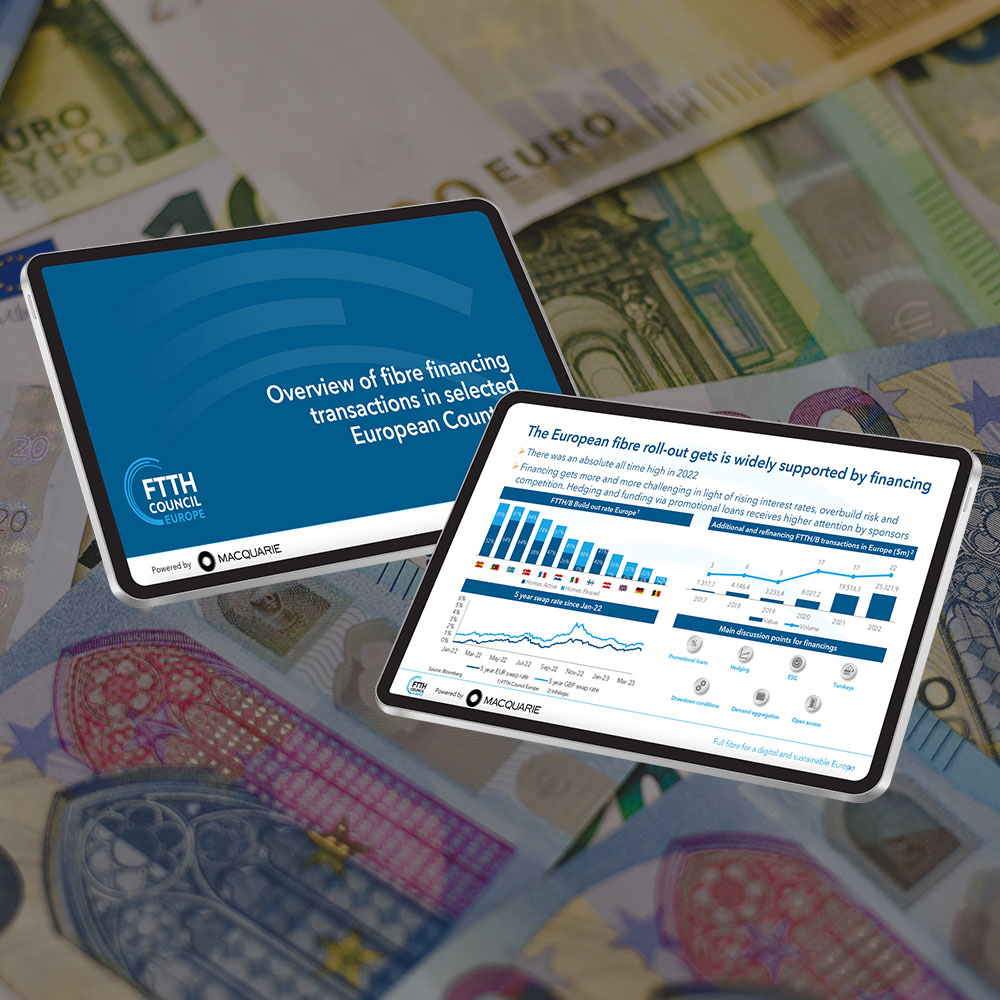
The Investors Committee would like to contribute to this with our Investment Tracker, which we produce twice a year together with Macquarie. In it, we show current developments in credit volumes, interest rates, KPIs, covenants and information requirements for the main European regions.

In addition, our Guide to Successful Fibre Business Models provides a good overview of the business models relevant on the market. These differ significantly in terms of opportunities and risks and thus in the structure of an investment.


What can you tell us about the upcoming initiatives from the Investors Committee?

It is certainly not easy to keep track of things in the current environment. But that is precisely why our approach is not fatalistic. We firmly believe that the future can be shaped. To this end, it is more important than ever that entrepreneurs and investors talk to each other. We have our Investors Committee for this exchange. With the Investment Tracker and the Guide to Successful Fibre Business Models, we continue to produce decision-relevant information. However, sensemaking is also important, and that is what we do in the dialog between our committee members.


More about Thomas Miller


Since 2006 at Hamburg Commercial Bank, Executive Director. Publisher of several studies on fiber financing. Writer and speaker for bank financing. University lecturer at Hamburg School of Business Administration and International School of Management. Head of the FttH Council Investors Forum.


Xavier Renard

Applying for a Board of Directors position


First and Last Name:  Xavier Renard

Company Name: ACOME

Current position: Marketing Director

Company Type: Vendor/Reseller (Products)


Biography:

Xavier Renard, with 19 years in Product and Strategic Marketing, holds 23 years of experience in the Telecom and Datacom. Notably, he contributed to Nexans and Schneider-Electric, focusing on FTTH market and digitization in smart buildings and assessed for Schneider-Electric product’s environmental impact. As ACOME’s Marketing Director, he champions environmental responsibility, also serving on the FTTH Council Europe Board.

Position statement:

ACOME Group is a French industrial company specialized in High-tech network cables, ducts and connectivity. With more than 20 years of experience in fibre networks, ACOME has developed a strategic capacity for anticipation during its 90 years of existence. In the year 2000 ACOME invested in its fiber-drawing towers. In 2004, ACOME was one of the very first companies to join the FTTH Council EUROPE. In 2009, ACOME was one of the founding members of PEP Ecopassport, an Environmental Product Declaration (EPD) certified by an independent third party and now became an international program with more than 3000 EPDs available on line.  In 2022, I was elected to the board of directors of the FTTH council. I was convinced that the FTTH Council had unexpressed potential to create European momentum in the decarbonization of the sector, and I wanted to make my personal contribution. The newly created sustainability committee provided an ideal framework to organize a pilot project with 11 members. We demonstrated that collectively we could invent tools allowing not only to build a first database of conversion factors for products in the sector and a first observatory, but also a means of having shareable data. At the same time, members were able to assess their company's carbon footprint (GHG Protocol). A win-win situation, whatever the size of the company. I am renewing myself today for a second term because, while we have just launched the cooperative FTTH carbon footprint platform, I want to transform this initiative into a real and sustainable dynamic. The first model will have to evolve, the rules will have to be adapted to a larger number of participants etc. This can only happen collectively. It is therefore not only a call to vote, but also a call to join the platform!

Your past role(s) and activities in the FTTH Council Europe:

Since the very beginning of the FTTH Council, working for Nexans at that time. I came back in the fibre sector 5 years ago, and being elected at the board in 2022. I am nowadays active in the Sustainability committee.

More episodes from this series


Help us create a brighter future!

Join the Fibre Council Europe
today and benefit from Europe’s
largest ecosystem of fibre players