Episode 5: the In-Home Broadband Excellence Committee


Maarten Egmond, Chair of the In-Home Broadband Excellence Committee of the FTTH Council Europe, offers his view on the critical business of in-home connectivity. As the industry is very much focused on bringing fibre to the end-users' premises, it its equally important to look at the quality of the domestic network, and to make sure it does not become a bottleneck. In this interview, Maarten illustrates the best strategies for CSPs to make in-home broadband excellence a successful business case, and much more:

  1. Why is In-Home Broadband Excellence strategically relevant for CSPs, and how does it relate to fibre network deployment strategies in the European Union?
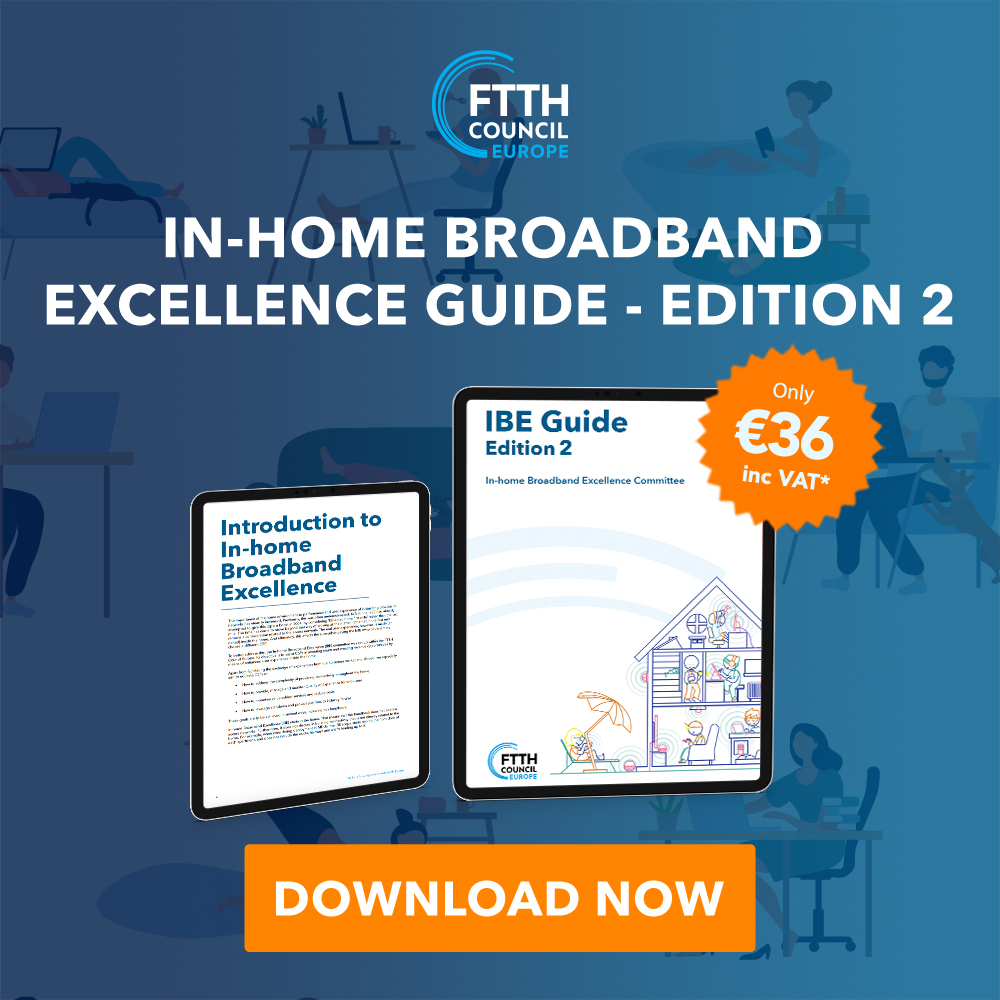
  2. You recently launched a revamped edition of the In-Home Broadband Excellence Guide: could you tell us a bit more about this asset, and what changes from the previous issue?
  3. In such a rapidly evolving time for our industry, what are the main trends that CSPs should look at, and how could these contribute to a successful business?
  4. You certainly started the preparations for the next FTTH Conference: what should we expect from the IBE Committee in Berlin?

Read the full interview below to get the answers to these questions.


Why is In-Home Broadband Excellence strategically relevant for CSPs, and how does it relate to fibre network deployment strategies in the European Union?

For many years, focus for CSPs has been on rolling out fibre to keep up with consumer demand for better broadband connectivity (and lately to help reduce carbon footprint as well). However, with focus on fibre deployment, the in-home network has become underserved and is now almost always the bottleneck to deliver good quality service.

Many events in our industry have recently come together to require a change in approach. Not only have we reached 50%+ homes passed, but as Thomas Miller of the Investors committee said in the last episode, the investment landscape has changed significantly. We also see costs of deployment going up and labour continuing to be an issue. Therefore it’s important to focus on take-up rate instead of (only) homes-passed.

The In-home broadband network is critical for this, as end-users will not see the value of fiber if they don’t get great Wi-Fi as well. Moreover, a good in-home broadband network can provide the basis for adding new services to the CSP offering, which can provide great opportunity for much needed ARPU increase and retention as well.

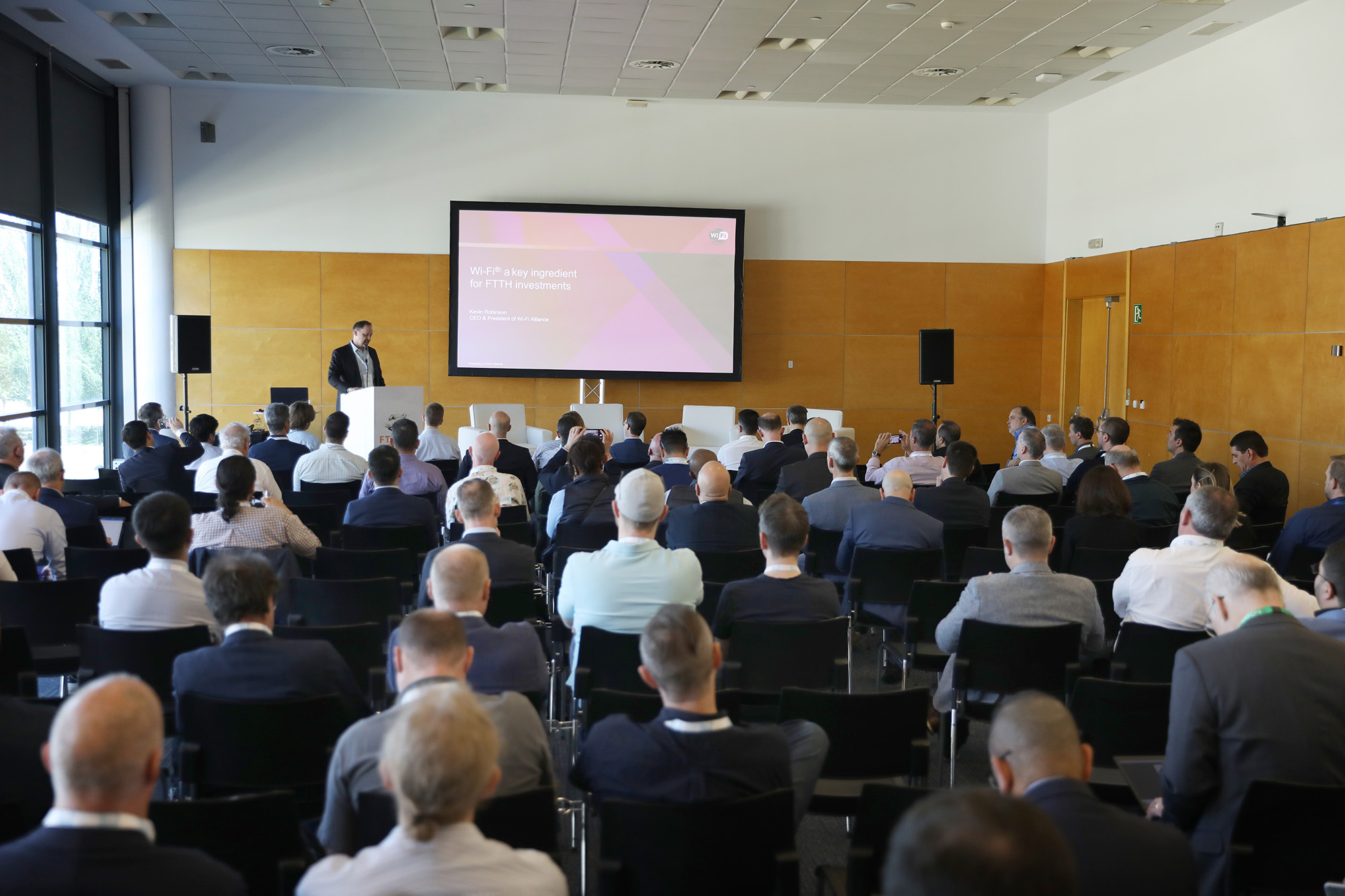
In the picture above, an attentive audience during the In-Home Broadband Excellence workshop at the FTTH Conference 2023 in Madrid.
 

In such a rapidly evolving time for our industry, what are the main trends that CSPs should look at, and how could these contribute to a successful business?

On the in-home network side, there is a lot of buzz about Wi-Fi 7, of course. While it’s certainly a trend to keep a close eye on, at the same time, such new technology will take time to get adopted, and have a high premium that certain consumer enthusiasts are prepared to pay at the start, but the diverse CSP consumer base may not be ready for, for a while.

A second trend that I would highlight is that of IoT and the Smart Home. While this is something that has been talked about for more than a decade, there are now finally signals that technology is becoming mature enough to deploy by CSPs and instead of just bringing cost and complexity may actually start to increase ARPU. New standards such as Matter and Thread are well positioned to finally break through, even if much work still needs to be done on interop in the field instead of just on paper.
 

You recently launched a revamped edition of the In-Home Broadband Excellence Guide: could you tell us a bit more about this asset, and what changes from the previous issue?

The IBE Guide is a great source of information for CSPs to stay up to speed on the in-home network. Technology evolves quickly, but even more so in the home environment, with Wi-Fi and consumer technology changing almost daily. Home infrastructure, management and new services are all key topics that are addressed from CSP perspective in the Guide, and the IBE Committee works hard to provide updated and added content in every edition.

There are few, if any, resources where these aspects are all coming together in a compact but comprehensive form. CSPs that read the Guide will get more understanding of the state of technology, how it can be applied in a CSP business environment, and perhaps most importantly: where to be critical of vendor stories, balance the pros with the cons, and enable CPSs to ask the right questions to drive their specific business needs.


You certainly started the preparations for the next FTTH Conference: what should we expect from the IBE Committee in Berlin?

Yes, preparations are in full swing. Besides releasing a new edition of the IBE Guide, we have planned a workshop where we address the topic of new services and increasing ARPU. We will bring several examples of services to the table, but would especially like to discuss the state of Matter and Thread. Both as example of a new service, but also to look at the underlying technology of Containerisation. Containerisation is a very interesting topic, because on the one hand it may not be clear to CSPs why it’s such an essential part of bringing new services to market quickly and cost effectively, while on the other hand the underlying technology offers many ways to implement it, each with their pros and cons. So understanding this topic will be essential for CSPs moving ahead, and the workshop will be an ideal place for us to help them. We look forward to a fruitful discussion at the next FTTH Conference in Berlin!


More about Maarten Egmond


Maarten Egmond finished university with a double BSc in IT as well as applied physics and started his career in R&D of optical components, followed by embedded software development work for high-end X-ray machines. After this, he moved into the FTTH industry where he has been contributing to technology and product development for more than 15 years, currently serving as CTO of Genexis, and since 2021 as Committee Chair of In-Home Broadband Excellence for the FTTH Council Europe.

James Wheatley

Applying for a Board of Directors position


First and Last Name:  James Wheatley

Company Name: IQGeo

Current position: Head of Product Management 

Company Type: Vendor/Reseller (Products)


Biography:

I have worked in the telecoms industry, specifically the geospatial software business for over 25 years. I am currently Head of Product Management at IQGeo, with responsibility for all aspects of product management relating to the IQGeo solutions portfolio for both telecoms and utility markets, in particular working with our end customers to define our product roadmap. I completed my doctorate in Geographic Information Systems at the University of Newcastle upon Tyne in the UK and then went on to work at GE Smallworld.  During my time at GE, I worked in a range of roles in the telecommunications business before moving into product management. I managed the Smallworld telecoms portfolio for over 10 years. At IQGeo I have been Head of Product Management since 2022 leading the team with responsibility to define the product roadmap.

Position statement:

I am currently the Head of Product Management at IQGeo. I have worked my entire career, now over 25 years, in the telecoms domain, always working in the geospatial\GIS part of the industry, with a particular focus on physical network inventory. I joined IQGeo two years ago and prior to that I held various roles at GE in the Smallworld business, always focused on the telecoms market. My experience in product management working with customers has provided me with a global view of the telecoms industry from a software perspective, and I see software as a critical aspect for the industry and important to be represented at Board level within the Council. The nature of my role in product management requires me to keep up with a broad range of topics within the telecoms industry, software but hardware also, and constantly evaluate and consider how these changes, both socio-economic and technological, will impact the world of FTTH in Europe. My global role also allows me to see wider trends in the industry and understand how they may apply to the Council’s focused mission in Europe.  IQGeo’s recognises the importance of the Council and I have the on-going support of the senior leadership team to dedicate time to being a member of the Board, as Raf Meersman has done in the past four years. I believe that I can make a valuable contribution to the Board by bringing perspective from the software vendor community to the Board level first and foremost but my many years experience with the conference also provides me the opportunity to provide insights into the future of this critical element of the Council’s activities.  If successful with my candidacy I look forward to working the board over the next two years to drive forward the Council’s mission to reach full fibre adoption in Europe.

Your past role(s) and activities in the FTTH Council Europe:

I have been engaged with FTTH Council for 10 years now. I first attended the conference in 2015 and have participated in the conference every year since.  During that time I have organised and participated in opening day workshops nearly every year with variety of operators and vendors, frequently with my colleagues from Comsof.  I have engaged with the D&O committee on and off over that time, particularly regarding the FTTH Handbook which I have contributed too, first time version 4 or 5 and I largely re-wrote the GIS section in the last major release, version 9, from 2021. I have also attended the last 3 General Assemblies to increase my participation and representation at the Council.

More episodes from this series


Help us create a brighter future!

Join the Fibre Council Europe
today and benefit from Europe’s
largest ecosystem of fibre players