Episode 2: the Deployment & Operations Committee


Michael Timmers, Chair of the Deployment & Operations Committee of the FTTH Council Europe, reveals some of the projects in the pipeline of this exciting working group, while highlighting the benefits of joining this centre of excellence when it comes to FTTH know-how:

  1. Without revealing too much of your work plan, what can we expect from the D&O committee in 2023?
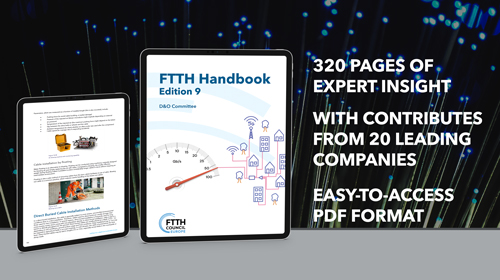
  2. The D&O committee is responsible for the publication of the FTTH Handbook: how did it become such an important resource for the fibre community?
  3. What are your views regarding the evolution of FTTH technology?
  4. Generally speaking, what is the profile of the companies joining the D&O committee What do you value the most from your work at the FTTH Council Europe?

Read the full interview below to get the answers to these questions.


Without revealing too much of your work plan, what can we expect from the D&O committee in 2023?

The purpose of the Deployment & Operations committee is to provide the Members of the FTTH Council Europe with expert insights into the latest innovations and trends animating the fibre industry. We regularly organize webinars and produce white papers, often consisting of a high-level technological overview coupled with a practical business case. Our aim is to provide our members with an answer to the important question: “Interesting, but what’s in it for me?”.

Topics of interest for this year center around the role of IT in the future end-to-end process of a fibre operator, from design to deployment, over operation, but even touching upon finance and budget aspects. The vision of the Deployment & Operations committee has always been that the fibre network is an important asset, that should be leveraged as much as possible. As a result, we have outlined how the business case for wireless-wireline convergence is self-evident. This year, we will try to go a step further by showcasing some technological improvements to remove some of the bottlenecks that have slightly held this convergence back, discuss how XGS-PON is ready to support 5G back- and midhaul, and analyse how newer fiber technologies can add fronthaul to this list as well.

In line with this mission, this year’s Deployment & Operations committee workshop at the FTTH Conference will be focusing on the theme of “Fibre for Everything”, supporting the wider sentiment of the council that we should extend the scope beyond FTTH. Past workshops from the committee have always been excellently received and well attended. They provide an opportunity for technical experts to come together and discuss the latest trends they expect to see at the show.
 

The D&O committee is responsible for the publication of the FTTH Handbook: how did it become such an important resource for the fibre community?


Our flagship deliverable is indeed the FTTH Handbook. The main attraction of this resource is the fact that it is a regularly updated manual that comprises an end-to-end knowledge overview of all aspects related to the fibre industry, from planning, to building and operating highly efficient, future-proof, automated fibre networks. As such, it encompasses a very broad scope of subjects, but it also goes into the details of everything it touches upon, thanks to the multiple reviews and updates which this asset has gone through over more than a decade. For the near future, our plan is to update fewer sections of the FTTH Handbook, but more frequently than what has been done in the past. Please expect some updates around aerial fibre infrastructure this year around!


What are your views regarding the evolution of FTTH technology?

We have seen a spectacular increase in the deployment of fibre networks over the past years. This has mainly been driven by the realization that investments in physical infrastructures continue to pay back well beyond the typical investment horizon operators had been using in the past. When considering a longer time horizon, going for a future-proof technology, that is easy and cheap to maintain and operate, is the real key. Fibre therefore becomes an easy choice, and the innovation in FTTH technologies is continuing. I expect the active components to move forward and cost-effectively support even higher data rates. From a use case perspective, I expect fibre to extend beyond FTTH, moving into the enterprise, industry, wireless backhaul, and much more. From the passive side, I expect solutions that continue to help operators bring down operating costs. This is also the case for innovations around cloud-native management of these networks.
 

Generally speaking, what is the profile of the companies joining the D&O committee?
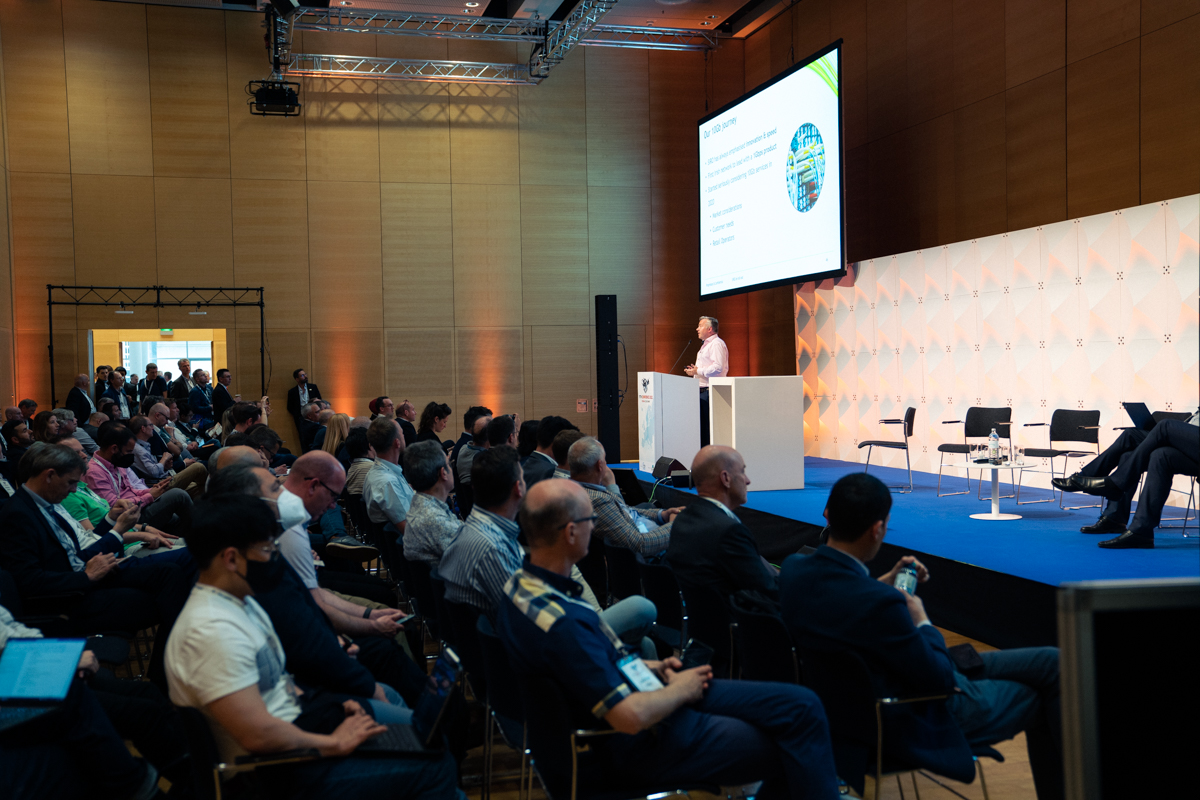

The members of our committee are interested in the fundamentals of the industry they are working in. Most of them are technical experts in one specific field, and are keen on sharing their knowledge with others, but also learning from others. For the future, I would very much welcome some additional operator members to join the committee, as this part of the value chain is less represented than others. Hearing the point of view of operators would be extremely enriching for the Deployment & Operations committee, as telecom operators are ultimately those running and operating the technology we are making available.

Finally, the ultimate benefit of taking part in the activities of the Deployment & Operations committee is to acquire and share cross-knowledge oh how an FTTH network work and will work in the future, from a wide range of technical experts, or experts-to-be.


More about Michael Timmers


Over his professional career, Michael has been jumping back and forth between the fixed and wireless domains. He obtained a PhD on Machine Learning for Radio before it was the hot thing to do and has researched and introduced several innovative products in the market across these different technologies: Fixed Wireless Access, Wi-Fi, DSL, and Fiber technologies.


Use of recycled plastics in CPEs (Customer-premises equipment)

Member company: Genexis
Country or geographical scope: Global
Period: 2018 onwards
Company type: Vendor/Reseller
Product/service category involved: CPEs

Abstract

CPE equipment vendors can limit or even abandon the use of virgin plastics in the housing of their CPE products, by using recycled plastics instead. This has a positive impact on the circular economy, where materials can be reused. Recycled plastics material is easier and more cost-efficient to obtain in darker colors, so in practice using recycled plastics often means the products will have a black color.


Context

Policies and agreements like The Paris Agreement are driving the adoption of more sustainable products and processes. From multiple angles there is more pressure and need to reduce our environmental footprint and therewith limit global warming. This also applies to the FTTH market. The whole value chain, ranging from end-users to operators/ISPs and suppliers, is demanding for more sustainable products and solutions.

There are many aspects of sustainability, but maybe the most well-known one is recycling. With recycling, waste materials are converted into new materials. Meaning there is no need of virgin materials, while the waste materials get a new life. Recycling is nowadays widely applied for plastic packaging, but still less in products. This is a missed opportunity since this is also a feasible solution for plastic products housings of CPE equipment.
 

Solutions

Today, most plastics suppliers provide solutions for using recycled plastics in product housings for CPE equipment. The recycled plastics can offer the same specifications compared to virgin materials, while the cost difference is relatively small. This cost difference depends however on the color of recycled plastics: to obtain a white/light color, lighter color types of plastics need to be filtered out from waste streams, which is a labor-intensive task and therefore more expensive. In addition, it is more difficult to achieve a fully smooth white product surface. Hence, in practice we see that most of the recycled plastics in CPE products are black. This keeps the cost impact under control, while simplifying the recycling process and ensuring an evenly colored product surface.
 

Results

By implementing recycled plastics in its CPE portfolio, Genexis achieved multiple results. One example is a custom-made product for KPN, the Tier-1 network operator in the Netherlands. One of KPN’s goals is to use almost 100% reusable materials by 2025. To support KPN in this goal, Genexis developed a Network Terminator (NT) which uses >98% recycled plastics for the products housing.

According to the results of a professional Product Circularity Report, besides the recycled housing a total of 56% of the materials used in the NT can, in theory, be recycled. Furthermore, the NT is well designed for disassembly and almost all connections are accessible. This results in high levels of component recovery. For all details, please refer to the Product Circularity Report that can be found here.
 

Conclusions

Recycling is very common for plastic packaging, but unfortunately less common for CPEs so far. This is a missed opportunity, since recycled plastic materials are widely available with similar specifications and at similar pricing levels compared to virgin plastics. Achieving white recycled plastics out of a wide color range of waste streams is a challenge however, therefore we see a trend of an increasing number of black CPEs in the market. The question is whether operators, ISPs and end-users will accept this, but hopefully this will not be a blocking factor in making CPEs more sustainable.
 

Contact

Martijn Rooijakkers, Sr. Commercial Product Manager, Genexis
m.rooijakkers@genexis.eu

More episodes from this series


Help us create a brighter future!

Join the Fibre Council Europe
today and benefit from Europe’s
largest ecosystem of fibre players